What Do You Worship?

Artist unknown

Artist unknown

Last night, I dreamt that someone wove their way through a sea of people at a party to hand me a landline telephone. “Hello?” I asked. My grandmother was on the other end of the line. I knew it was her, even though my repeated “Hello?”s were met mostly with silence. Eventually, she tentatively murmured, “Hello?” back. Without the exchange of anything but those two words, I knew she knew it was me. 

My grandmother died over 18 years ago. Although I’m sure I have, I can’t recall a specific time before this morning that I’ve dreamt about her.

I sit in my living room, watching the early morning sun cast its rose gold glow over the westernmost hills of Berkeley, thinking about those I have known and loved who have died. Grandma, Grandpa, Nana. Nick, who much of my world and heart revolved around during the latter half of college. Donna and Em, who brought lightness to my days after moving to the Bay. I think of my friend from high school and her husband, who—our age—died unexpectedly this year.

Today is Halloween. Samhain. The pagan festival of communing with and celebrating the dead. The day in the cycle of each year where the veil between worlds is thought to be most thin, to allow us to send and receive messages, connect with the spirits who have passed from this world onto the next. Evaporated in form but existent, still, as energy. Because, as shown in the Law of Conservation of Energy in physics, energy cannot be created nor destroyed. Only transformed.

I placed my mug of coffee down on the table. Instinctively began to gather candles of varying shapes and sizes and set them in a circle. Placed elemental totems inside the ring. A quartz crystal for air, third eye, highest consciousness, connection to the ethers. A sprig of fennel, now brittle and dried, that I picked years ago from an edge where the land meets the Bay. A dolphin ring I bought with my grandma at a truck stop restaurant halfway between LA and Arizona, once upon a time. An ornate metal koi fish that belonged to my Nana, its history and stories unknown to me, but of her nevertheless.

I lit the candles. Stared at the flames. And breathed.

Worship is an intense word. Steeped in religious connotations, evoking a level of extreme devotion that I think many of us are not accustomed to extending to anything these days. But this morning, because I’m off work on PTO and had the gift of time, because they say the veil is thin and even though I don’t know that to be true with any certainty I sure as hell don’t know with certainty that it isn’t true, I made a circle out of flames. To pause. To direct my attention. To remember. To mourn. To call in. To celebrate. To worship.

Earlier this year, while frustratedly spinning my wheels over the phone to a friend about a situation that did not deserve a modicum of the energy and attention I was giving it, my friend politely yet firmly interjected. She asked me, point blank: “What do you worship?” 

I sat, in silence, stunned.

It’s a disarming question.

It’s a disarming question. And a vital one.

Many traditions of meditation talk about attention as our most precious commodity. I tend to agree with this thesis.

Where we direct our attention in each moment of each day—whether consciously or unconsciously; with intent or through habit—dictates how we spend our energy; what thoughts we radiate within ourselves and communicate to the world; and how we spend our time. The cumulative sum of our moment by moment attention determines what we grow in ourselves and the world through the simple yet impossibly complex act of living.

I am sitting in an airport. Over the phone, thousands of miles between us, Missy asks me this arresting question. What do you worship? I pause. Think about my answer. My values. What I effort to connect with, to create. To find reverie in. To actively devote my attention, the sum of the moments of my life.

Words emerged. Integrity. Vulnerability. Connection with nature. Community. Empowerment. Art. Love.

And then, a follow-up question. The moment of truth: Are you living in alignment with these devotions? Am I directing my attention and, by extension, my energies in ways that live into and live out these things?

Living an embodied existence is messy. Challenging. Impossibly complex. Some days we do better than others; this is true for each and every one of us. When we aim to live our lives honoring vulnerability, justice, nature, inclusion, art, listening, equanimity, beauty and love, friction often occurs because we don’t live in silos, separate from each other or from society at large. We are brought up and live within a system that worships its own set of deities.  

Money. Power. Individualism. Whiteness. Masculinity. Heterosexuality. Competition. Dominance.

And so.

Worshipping love is an act of resistance. Worshipping quiet. Worshipping introspection. Worshipping the earth. Self-connection. Diverse voices. Collectivism. These are all active violators to the gods that are laid before us here, now, in 21st century America. Gods of power, of money, of personal gain at the expense of others and the earth. Gods of erasure and forward motion rather than reverie for the traditions and wisdom of our ancestors, of the past. Gods of separation over unification. Gods of greed and excess. Gods of the material over the spiritual. Satiation and worth found through what we can afford and acquire, not what we cultivate and offer that comes from within. 

Shifting these devotions is an act of resistance. It shapes our culture. Shapes your life. Shapes collective consciousness.

And so, today, as the veil may or may not be thin, with time on my side I chose to devote my attention to honoring those who have touched my life and are no longer palpably in it. Who have moved on to their next iteration of existence, whatever that may be.

Cultures and people the world over are worshipping their ancestors today. The love, experiences and wisdom they shared. Living out their gifts and memories as best they are able. Worshipping connection, worshipping ancestry, worshipping love.

It is so easy to sleepwalk through life. To succumb to the pervasive distractions, insatiable desires, pressures as invisible as air yet heavy as tar. To give into our internalizations of the values imposed upon us by our contemporary culture, by the world at large.

With so many cards stacked against us, so many conveniences urging us to be passive receptors instead of active creators of our lives, I invite you to ask yourself: What do you worship? What do you devote your attention to? Are the two in alignment? What shifts can you make to live more fully into the values you genuinely want to embody, want to fill your life, want to light up the world?

Sending love to you all, then and now, here and in the ethers. May we choose to actively worship that which brings healing and growth, love and joy to us all.

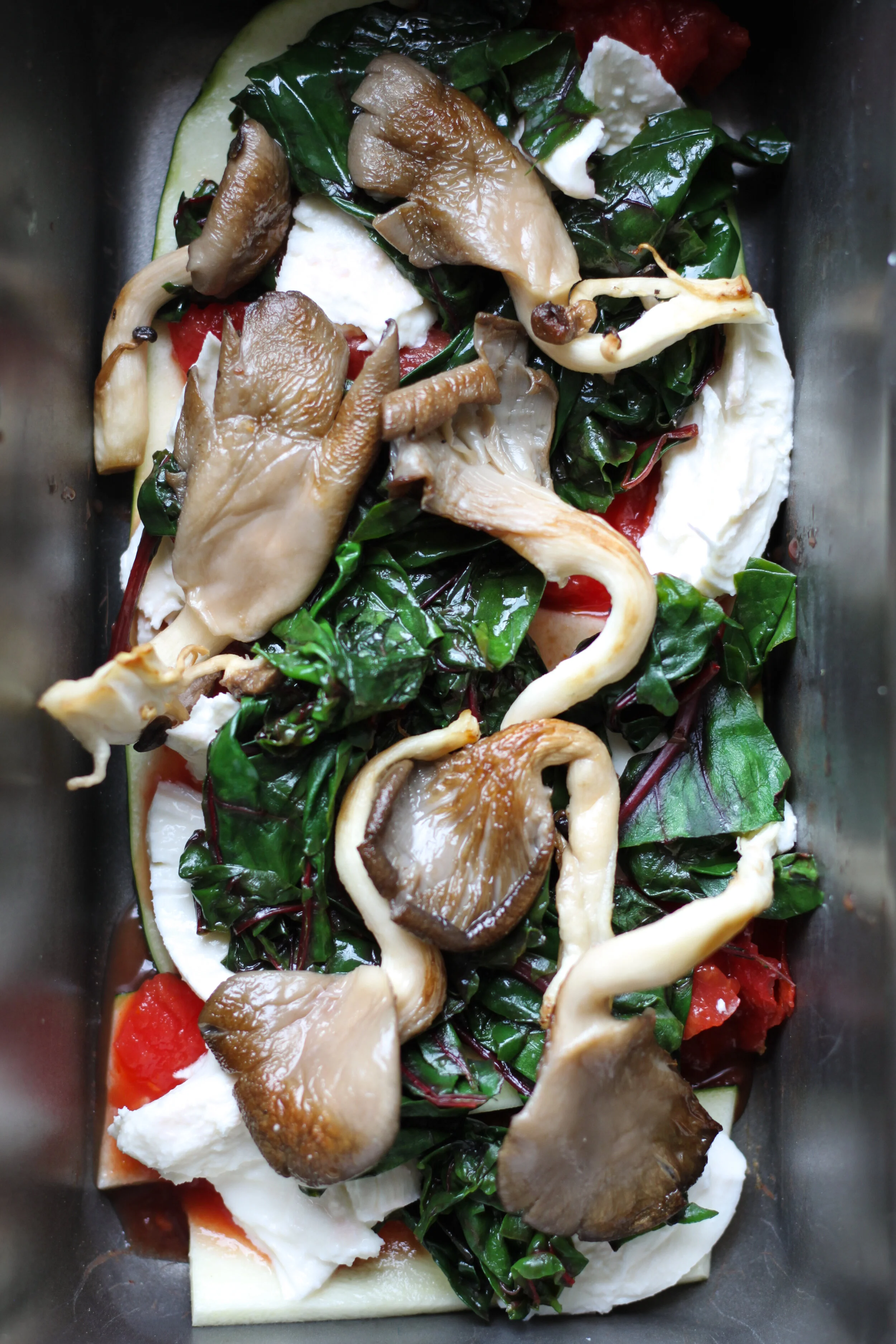
Zucchini Noodle Lasagna with Oyster Mushrooms, Basil & Swiss Chard

zucchini_lasagna.jpg
zucchini.jpg
oyster_shrooms2.jpg
chard.jpg
oyster_shrooms.jpg
chard_bath.jpg

Let’s be honest: food is contentious. It is personal, it is cultural, it is political, it is emotional. 

We all have a diet (a general, baseline set of foods we do and don’t eat); we go on diets; and we can be very convicted about what foods we believe should or shouldn’t be included in a healthy diet. 

Some people are purists. Give them a pizza made with a cauliflower crust and they’re like, EXCUSE ME THAT IS NOT PIZZA. Which is a fair stance to take. Some people are open to culinary interpretation, playing with new ways of iterating classics. Oftentimes, substitutions are made to accommodate dietary preferences or restrictions, which is how I came to use a lot of the ingredients I do (especially in sweets :). 

So, zucchini noodle lasagna. Arguably not lasagna. But maybe it is lasagna! Call it whatever you want. Ultimately, it is freakin’ delicious (I made it four times before I finally dedicated time and effort to photographing it to share with you all) and—yes, I am going to go there—much healthier for you than traditional lasagna.

Modern nutritional science has evolved enough at this point to recognize that refined, white flour is not good for us. Yes, it makes dough light and elastic and taste divine. But it is massively inflammatory and our bodies do not like it, especially in excess. 

Do I eat white flour? Yes. In fancy croissants and sourdough pizza, mostly. Am I conscious about the amount and quality of white flour I consume? I try to be.

We have to pick our battles. If we value health and value pleasure, both of which I believe are absolutely vital to life, we need to determine what percentage of each feels like balance for us and we must, at times, make some adjustments to keep those scales aligned. I bake cookies with whole grain flour and turn cauliflower into rice in service of health.

That being said, zucchini is a fantastic substitute for white flour in the form of pasta. Is it the exact same thing? No. Will it satiate the cravings steeped in familial memory of your Italian grandmother? Probably not. Is it still delicious and WAY healthier for you? Yes, 100%. 

Funnily enough, my inspiration for this lasagna came not from wanting to have lasagna sans flour, but from an approach to food that I developed during the two weeks last year that I was hardcore Keto (…just to see what it would be like). A diet centered around foods with a high percentage of fat, Keto suddenly thrust a number of ingredients that were atypical for me into a primary position in my life—cheese among them. I ditched the diet pretty quickly (not because I didn’t feel good on it, but because I was bored AF with such a limited palette to choose from—especially as someone who doesn’t eat meat), but some of its key ingredients and general approach to macronutrients stuck. And so, this lasagna was born.

We can sit here and categorize this zucchini noodle lasagna however much we want: Keto, paleo, vegetarian, low-carb, gluten-free, grain-free, sugar-free (…and yes it is all of those things). We can debate about whether or not it’s actually lasagna. At the end of the day, it’s real food—90% or so from the earth—with diverse and dense nutrients and amazing flavor. 

Food politics and preferences aside, my hope is that you will love the taste and the experience of eating it as much as your body will feel nourished from it afterwards. <3

basil.jpg
zucchini_noodles.jpg
mushroom_saute.jpg
golden_mushrooms.jpg
lasagna_areal2.jpg

Zucchini Noodle Lasagna with Oyster Mushrooms, Basil & Swiss Chard
Serves 3-4

Ingredients
1 large or 2 medium zucchini
1/2 tablespoon sea salt (to be drawn from at various points)
1 tablespoon ghee or avocado oil
1.5 ounces oyster mushrooms (basically two large handfuls)
1 teaspoon extra virgin olive oil
2 cloves garlic, minced
1 bunch Swiss chard, de-stemmed, rinsed and torn into 2”-ish pieces (okay to leave it a bit wet)
1 (28-ounce) can crushed tomatoes (organic if possible - tomatoes are heavily sprayed with pesticides)
1/4 cup tomato paste (same as above)
1 tablespoon balsamic vinegar
3 sprigs basil, leaves removed from stems
2 (8-ounce) fresh mozzarella balls, torn into thin pieces

Also:
4-5 sheets paper towels
Mesh strainer
A loaf pan
Tongs - helpful, but not essential

Directions
1. Preheat the oven to 400°F.
2. Cut the knob off the end of the zucchini. With a very sharp knife or a mandolin slicer, slice the zucchini lengthwise into 1/4” thick strips. Lay the strips flat on a few paper towels (I lay the towels on a large cutting board) without overlapping and sprinkle generously with salt. (The salt draws out the water in the zucchini, which will make it less soggy when it bakes.) Set aside.
3. In a large skillet over medium high heat, warm the ghee or avocado oil until it sizzles when sprinkled with water. Add oyster mushrooms and a generous pinch of salt. Toss the mushrooms (with tongs if you have them!) until they’re well coated in the oil. Spread them out so as much of their surface area is in contact with the pan as possible and let sit, undisturbed, for a few minutes until golden. Flip and cook the other sides. When they’re nice and golden all around, transfer to a plate and set aside.
4. Reduce the heat to low and add the teaspoon of olive oil, followed by the minced garlic. Sauté garlic until browning, about one minute. Add chard and a generous pinch of salt. Sauté until wilted, about three minutes. You may need to cook it in batches depending on the size of your pan. When wilted, transfer to a plate and set aside.
5. Pour the crushed tomatoes into a mesh strainer and strain out most of the excess liquid. Transfer to a mixing bowl, add balsamic vinegar, tomato paste and 1/4 teaspoon salt, and stir to combine.
6. Return to your zucchini noodles. Using a paper towel, dab off any moisture that has beaded out of the zucchini until it looks relatively dry.
7. Assembly time! Spread a thin base layer of the crushed tomato mixture on the bottom of the loaf pan. Cover the surface area on top of the sauce with rows of zucchini (you will need to cut the strips into various lengths to make this work). Layer on chard, mushrooms, whole basil leaves, sauce and mozzarella, followed by the next layer of zucchini noodles and all the fillings again. (I like to put the mozzarella next to the zucchini because it acts kind of like glue, but you can layer them in whatever order you like!). Finish off with a layer of zucchini, followed by sauce and mozzarella.
8. Bake until bubbling and the cheese on top is golden, about 30 minutes. Enjoy!

On Supporting Creative Growth | Pollinate Journal 2.0

meredith_xinalani_ocean (1 of 1).jpg

It’s necessary to take a step back sometimes. To pause and review, reflect, adopt a bird’s eye view. To notice the ways in which evolution has occurred. To question whether your present approaches, structures or habits are working. To be thoughtful about what you might be able to shift to help yourself continue to show up, to do the work, to grow.

This December will be four years of Pollinate Journal. In those nearly four years, this blog has undergone a slow and rather significant transformation. If I’m being honest, I think this journal, this ever-evolving work of art, this digital collection of my thoughts and creations finally is what I wanted it to be all along—but didn’t know how to create, when I began it. Didn’t have the confidence to write what my spirit wanted to. Didn’t trust that I knew what to say; that the words would come. Didn’t have the courage to express with unbridled vulnerability. The wisdom to know my thoughts were worth sharing even though I didn’t always feel wise. (Note to you: your thoughts, your art, your work is always worth sharing, even if you don’t feel “enough”—credible enough, educated enough, acknowledged enough, skilled enough, ready enough, whatever enough.)

So, I started with food. My passion and my comfort zone. And I slowly but surely began to pepper in the heart stuff. The “self-help” stuff. The “how can I do this whole life thing better” stuff.

Writing vulnerably in this space, when I first began doing that, was absolutely fucking terrifying. And. There was a persistent truth that I couldn’t shake, which kept stoking the fire of courage within me. Seeing how perpetually we are bombarded with curated, false and perfected projections of “reality” across the many forms of social media with which we engage, the more important it felt to me to disrupt that norm—and the expectation we put on ourselves to adhere to it—with an authentic voice. I kept sinking ever more deeply into the belief that the more we show up in ways that feel vital to our spirits—no matter how terrifying they initially may be—the more we grow a safe space for others to do the same. So I pushed myself to write. To write about fear, about grief, about emotional eating, about grasping and surrender, about self-worth, about standing behind creativity in a time of political chaos, about what it might mean and look like to really show up in this world.

The deeper I got into this type of writing, the further I got from writing about food, and the more difficulty I had reconciling—or interweaving—the two.

But I kept at it. When I could. Over time, the “when I could” kept growing smaller and smaller. Part of that was due to my beginning to work full-time two years ago; part of it was due to the structure I had eventually—inadvertently—set up for myself. As the focus of my writing shifted, I continued to create recipes. But sooner than later, that led to the debilitating self-imposed expectation that every post must have a recipe, beautiful photos, a thoughtful short essay, and a bit of writing about the food, too. It became so much work that I stopped engaging, almost entirely. And Pollinate, its content, its continuous growth, has basically stagnated.

At a certain point, I had to get real with myself: My process wasn’t working.

//

I think, for many of us, it is easy to get stuck in a structure, process or expectation we’ve created for ourselves (even if the expectation is about needing to stick to what we imagine others expect from us—of which I am certainly guilty). When you’re in art school, you make work and then you have critiques. You talk about your creations, your concepts, your inspirations and the processes with which you’re engaging that get you there. You have opportunities to contemplate, receive constructive feedback, and revise if needed. When you’re creating in isolation, it can be more difficult to pause. To step outside of yourself and reflect. To see alternate routes. This is also true if you’re just plain stubborn. For the longest time, I succumbed to this structure of content that I had created. Told myself I had to share a recipe in every blog post because that’s why people on Instagram follow me—to see photos of food. But if that’s not what is sparking my interest right now, if that’s not what I feel inspired to share, then what’s the point? Especially if it means I hardly post at all?

So, a few months ago, I finally decided to change. To create a new structure—and with it, a new expectation—for this blog, based on the transformation that has been bubbling up with greater force over time. To own it. To reorient the content in a way that highlights what Pollinate has become, while also making it easier for you to navigate and easier for me to create. I have gone through every post on this blog and separated out the writings from the recipes—henceforth allowing myself to sometimes just write and sometimes just post a recipe. And allowing you to more easily focus your attention on what brings you here.  

//

You will now find the content organized as such: an index just for recipes and an index just for writings. Some of the recipes have writing about the ingredients, nutrition or how the recipe came to be that are extensive; others have writing that is super brief. And the writings are, now, just that. Essays. Musings on life, on mental health, on creativity, on spirituality, on wellbeing. On our relationships with our own precious selves and how to make those relationships more compassionate, more present and more full of love.

I suppose, in all of this, the difficult truth I’ve come to is that just because you have historically done something one way doesn’t mean it’s the way you have to continue doing it. It’s quite simple in theory, but much harder to implement. As creatures of habit. As creatures with egos. As creatures who can be stubbornly invested in what we’ve built. But here is another difficult truth: Sometimes undoing is required to move forward. Sometimes you need to fuck what you think people expect of you and dive head and heart-first into what you want for yourself instead. And to get clear about what you can do to help yourself get there. And then, step by step, simply do it.

//

At this moment of pause, of looking back and moving forward, I’d like to share with you five of my favorite recipes and five of my favorite essays to date:

RECIPES

Black Sesame Tahini Banana Bread
(Best Ever) Browned Butter Chocolate Chip Cookies
Asparagus, Caper & Toasted Almond Tartine
Roasted Cauliflower, Dates & Almonds with Herbed Moroccan Saffron Sauce
SQIRL’s “The Sprouty Pod”

WRITINGS

On Self-Doubt, Success & Creating a Meaningful Life
On Coming Home to Yourself
On Turning 30 | Wisdom, Ritual & Grief
On Mindful Eating
On Filling Your Cracks with Gold


Welcome to Pollinate Journal, 2.0. I hope you find softness and stimulation here. Find inspiration. Find activation. Find openings for growth.

// . // . // . // . // . // . // . // . // . // . // . // . // . // . // . // . // . // . //


P.S. MORE NEWS: I’M LEADING A WORKSHOP!

I am very exited to announce that I will be leading a workshop in the Bay Area this month for the first time in THREE YEARS!

If you’re in the area, please join me on Sept. 14 from 10a-1p in south SF for Astrology 101.

I realize this workshop topic may feel like a bit of a non-sequitur from my work here. It is ultimately both a reflection and extension of the ways my interests have shifted in the past few years. I’ve been studying astrology both formally and informally for two and a half years and have found it to be a profound tool for increased self-awareness, self-compassion, recalibration and acceptance of both myself and others.

In the workshop, I’ll be breaking down the structure of a full natal birth chart (we all have one! Our sun sign only scratches the surface of our personal astrology). We’ll go over all the signs, the planets and the houses - and learn how to read our own charts within that context. So fun. I promise.

The workshop is being hosted by Open Windows Cooperative in their stunning space in the Bayview. If you are a sucker for natural light, printmaking or creative industrial spaces, the venue alone is reason enough to come ;). Read more about Open Windows Cooperative here.

You can snag your (donation-based) tickets for the workshop HERE !

Hope to see you there <3.

astro3 (2).jpg

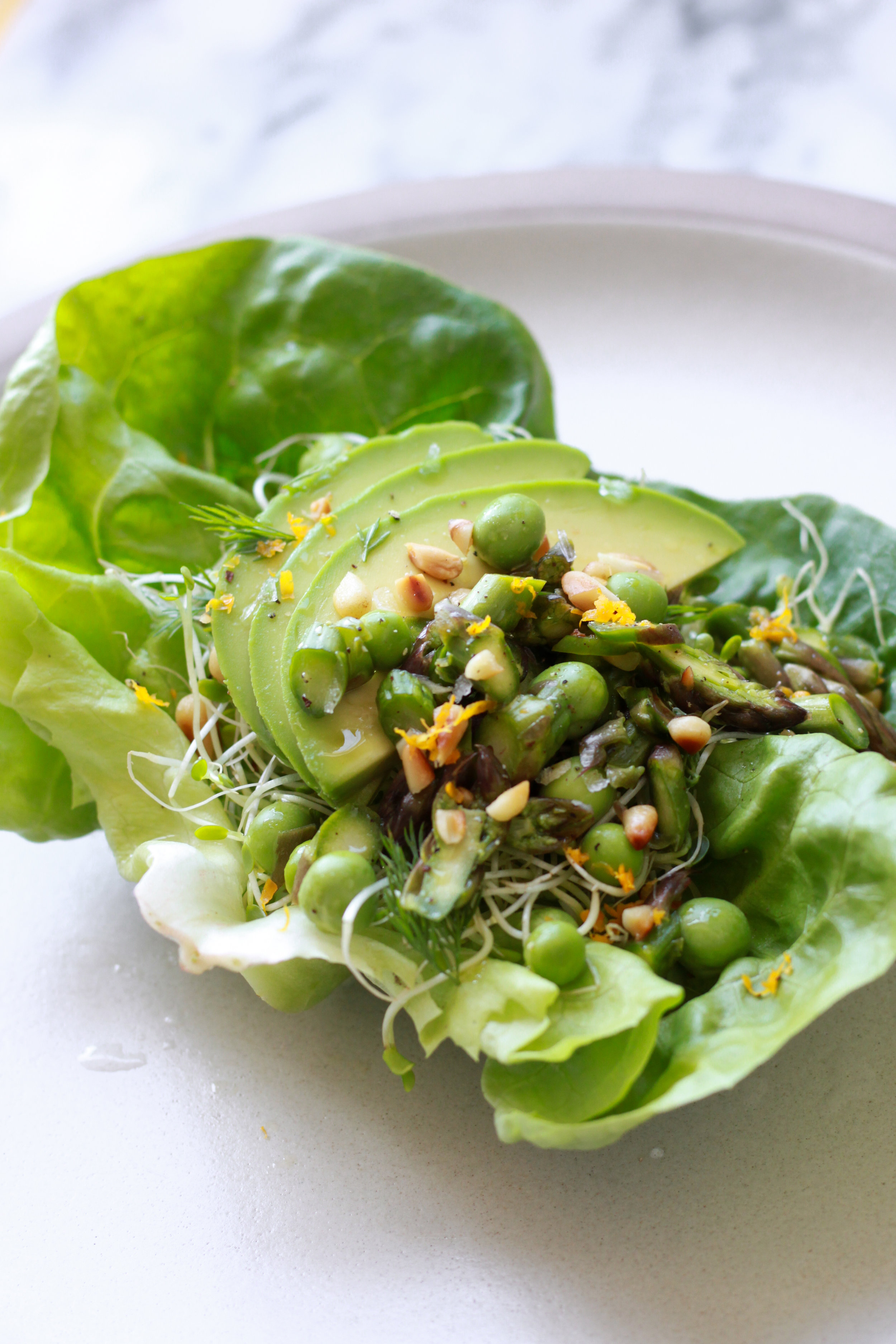
Spring Green Veggie & Herb Lettuce Cups

lettucecups1.jpg
asparagus1.jpg
englishpea.jpg

Super simple and fresh, this is essentially a handheld salad that celebrates the early bounties of spring.

I opted to stick with lemon and olive oil for the dressing to let the brightness of the vegetables shine through; if you’re keen to douse the lettuce cups in tahini or have a green goddess or other dressing that you like, definitely do!

Great as a side dish, these lettuce cups can easily become a full meal by mixing in some flaked salmon, chickpeas or other protein of choice. Happy spring!

untitled (6 of 11).jpg
asparagus2.jpg
lettucecup2.jpg
lettucecup3.jpg
lettucecups_duo.jpg

Spring Green Veggie & Herb Lettuce Cups
Makes 4 lettuce cups

Ingredients
1/2 bunch asparagus
1/2 lb English peas (in their pod)
1 Meyer lemon
2 Tbsp. pine nuts
2 Tbsp. olive oil
1/4 cup mixed herbs (mint, dill, chives, parsley, chervil are some nice options), roughly chopped
1 avocado, sliced
a few handfuls alfalfa sprouts
4 large butter lettuce leaves
salt & pepper

Directions
1. Cut off the bottom woody ends off the asparagus (1”-2” up from the bottom) and discard. Cut each asparagus stalk into 1/4” slivers at an angle and put into a medium sized bowl.
2. Zest the lemon and set zest aside. Squeeze the juice from the entire lemon over the asparagus. Add a couple pinches of salt, toss and set aside.
3. De-pod the English peas, adding the peas to the bowl with the asparagus as you go. Mix the two together.
4. In a small pan, toast the pine nuts over medium-low heat until golden brown, 5-7 minutes, stirring or tossing frequently. Once they’re golden, transfer immediately to a cutting board so they don’t burn. Roughly chop.
5. Add the olive oil, lemon zest, 3 Tbsp. of the chopped herbs and a few grinds of black pepper to the asparagus and peas. Stir to combine. Taste and adjust salt and pepper as needed.
6. Assemble the lettuce cups: In each butter lettuce leaf, place a layer of alfalfa sprouts, slices from 1/4 the avocado, and a couple spoonfuls of the asparagus and pea mixture (and its lemon-oil-herb dressing). Finish off with a few pinches of chopped pine nuts and the remaining fresh herbs.

On Transitions

Ana Mendieta, Silueta Works in Iowa, 1976-1978. Copyright the Estate of the Artist. Courtesy Richard Saltoun Gallery.

Ana Mendieta, Silueta Works in Iowa, 1976-1978. Copyright the Estate of the Artist. Courtesy Richard Saltoun Gallery.

Confession: I have spent a disproportionate amount of time tethered to my bed lately. Zoned out in front of my computer screen, binge watching the show UnREAL (which is this truly miraculous combination of wry feminist commentary on professional power dynamics/female relationships and unabashed soap opera. I highly recommend). 

While I have been giving into my body’s recent pulls towards sloth-ness unapologetically and with as little judgment as possible, I have also been struck by our recent seasonal energetic shifts. Have felt small jolts of energy, flickers of desire to move, to create. I have been reading a little more and writing a little more.

For the longest time though, I didn’t want to write. I wanted to want to write…but I just couldn’t get there. All I could feel was that wanting and my resistance to the doing. So instead of forcing myself to write for others, instead of wrestling with inspiration that wasn’t there, I decided to write for myself. Decided to get curious about why I was struggling so much to engage with my preferred mode of creative expression.

My fingers tapped onto the screen:
Where is this resistance coming from?

One silent beat and then:
Fear.

—Of what? 

Kept asking myself questions that I then kept answering. Reminded myself of this acronym used often by one of my greatest teachers:

False
Evidence
Appearing
Real

Fear. False beliefs that we internalize. That destabilize. Debilitate. Seduce us into self-sabotage, into drowning our voices, inhibiting our own growth.

Fear that I will not meet my own standards. Fear that my work will not be valued, be recognized. Fear that my ideas are repetitive. Better expressed by other people. So I do not write. I listen to myself give counsel to countless people in my life and I witness my own wisdom. I see them soften and bloom before me. I see, hear, feel how far I have come in my own thinking, my own awareness, my own relationship to the world, to what I believe to be possible, to my own soft heart and self. Yet I cannot write it. I feel stuck. Feel uninspired or without flow.  

Deep inhale.

Deep exhale.

And then, something surprising. Calm. A crack, a small opening that offered a soft shard of light and within it, some clarity. Presence. Allowance of the emergence of something deeper than my cognitive mind. A softening in my tender heart. Fear and release and a glimmer of courage and spark all at once.

//

The earth tilts and the dark veil of winter is lifted as the sun, its warmth, its radiant light begins to emerge. It is calling to us. Beckoning us out from our homes, our hibernation, our long journey within. We can harness this energy. We feel awakened, catalyzed by it. Magnetized by the sun, the awakening of the earth and its brilliant blooms that surround us.  

Transitions are, most often, not easy. The sun claims its many extended moments hovering in the sky yet our days are still interspersed with rain. Transitions take grace, take flexibility, take presence. They take moving through discomfort, take meandering routes, take time. Seedlings must be nourished by the sun and the rain alike; can only ever emerge in the exact time they take to do so. They do not grow anxious with their development, do not spite the sun for not blazing more steadily, do not question or argue with the journey they are on.

I have felt the warmth of the sun, seen the delayed dusk of these days, felt my drives shift with the reawakening of the earth around me. I have acknowledged Aries season and the inspired, enthusiastic action it offers, it bolsters, it demands. I have spring cleaned, made exercise and eating vows, recommitted to writing, to creating, to keeping this blog alive. And. I am fucking tired. I feel exhausted in my bones. I am not sleeping well and am processing a whole host of other things in my life.

I am in the infancy of a transition and I want to be at the end.

I want to be recalibrated.

But, dear ones, dear self as well—

The only way to be recalibrated is to ever so slowly recalibrate. And the only way to recalibrate is to first and foremost meet yourself where you are. And then to make a series of small, aligned, manageable choices from there. To be real with yourself about all the weight you’re carrying, the fears, the hopes, the judgments, the love, the dreams. To allow it all. To hold it all with tenderness. To give it space to pour forth from you, to express itself, to move through you. When the river runs through, it clears and it creates anew. You cannot rush your healing. You cannot rush your growth. You cannot rush your creative process, your meeting of milestones, your getting to where you are going. It all takes the time it takes. And. You can support your healing. You can support your growth. You can nurture and bolster and take lovingly the hand of your creative process, your meeting of milestones, your getting to where you are going—to where your divine self and inner light want you to go.

//

So, dearest ones, dearest self— 

Let yourself be where you are. Like that liminal space between winter and spring. In the messiness of your transitions. In the darkness and the light. In the exhaustion and the energy; the confidence and self-doubt; the seductive comfort of staying stuck and the deep, fire-y drive to evolve ever forward. Honor that part of your process. Ask yourself what you need to begin to move towards the life you seek to create. Water your soil and douse yourself with sun. Lean into the thoughts, the choices, the practices, the challenges, the connections that nourish you. Be kind to your fear; hear its wounds and its worries. Allow the darkness that is in you and lead it steadfastly towards the light. There is no hurry in this. The transition is the alchemy, the releasing and the creating that will lead you to where you want to go. It is in itself a string of present moments, each divinely perfect in their imperfection, each exactly where you are meant to be.

Happy springtime, all. May this season of renewal stoke all of our fires so that we may shine that light into our own hearts and out into the world <3.

Ana Mendieta, Imagen de Yagul, from the series Silueta Works in Mexico 1973-1977, 1973. © The Estate of Ana Mendieta Collection, LLC.

Ana Mendieta, Imagen de Yagul, from the series Silueta Works in Mexico 1973-1977, 1973. © The Estate of Ana Mendieta Collection, LLC.

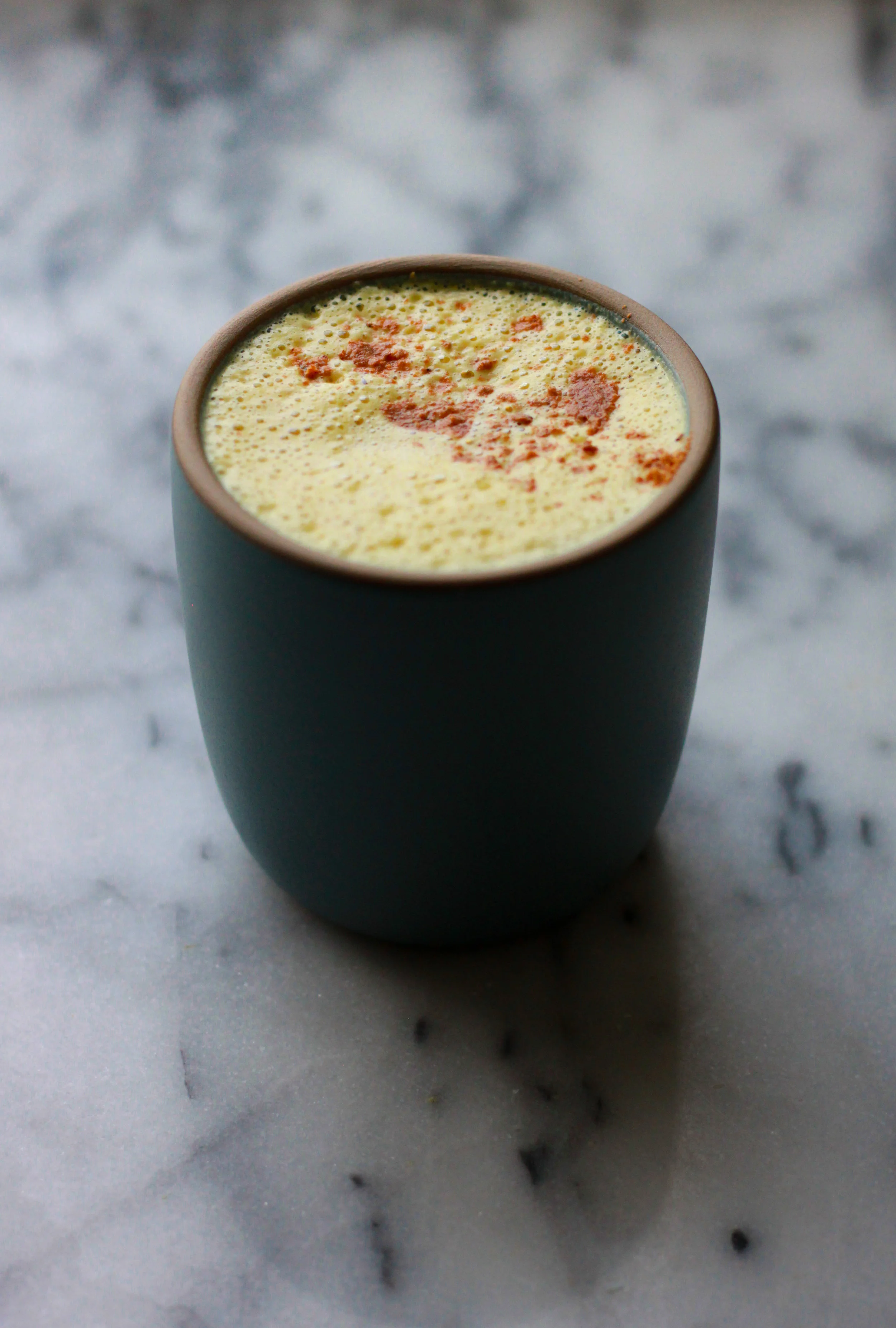
Vegan Turmeric Eggnog

turmericeggnog.jpg
eggnog_ingredients.jpg
nutmeg.jpg

I had the pleasure of co-developing this recipe for a project at work and got to make and share it with our entire team (definitely snag Navitas Organics Turmeric Powder and Cashews for this if you can; they’re amazing quality—and I’m not just saying that because I work there!).

Eggnog has loooong been a favorite of mine, but since becoming health-aware and vigilant about checking the ingredients in processed foods, I steer pretty clear of the stuff sold in grocery stores (which is, most often, insanely high in sugar if not also full of junky ingredients).

The added bonus about this recipe is that it is vegan—so everyone can enjoy it—and is refined sugar-free without compromising any of the thick, luscious texture or sweet, nutmeg-y flavor! The taste of the turmeric is subtle but adds a bright golden color and anti-inflammatory benefits, which certainly never hurt this time of year.

pour.jpg
eggnog_areal.jpg

Vegan Turmeric Eggnog
slightly adapted from Will Frolic for Food
serves 2-3

Ingredients
I Cup raw cashews, preferably soaked 4 hours 
4 Medjool dates, pitted
¼ tsp. freshly grated nutmeg 
¼ tsp. cinnamon 
¼ tsp. cardamom 
¼ tsp. turmeric powder
¼ tsp. vanilla extract or paste 
pinch of sea salt 
grind of black pepper 
3 Cups water, hot but not boiling 

Directions
1. Add all ingredients to a high speed blender.
2 Blend on low and then increase to high until smooth and creamy. Garnish with extra cinnamon or nutmeg. Enjoy!

On Navigating (the holidays) with Self-Compassion

IMG_8258.JPG

The first blog I wrote, back in 2012, was entirely about food. About the nutritional properties of certain foods and how eating (primarily plant-based) real food facilitates vibrant health. Three years later, I birthed Pollinate with every intention of following the same through lines here. Yet as I grew older and began to weather the personal, professional, physical and emotional storms that adulthood can and often does bring, I learned one of the most important lessons that I’ve yet gleaned in my life:

It doesn’t matter how much healthy food you eat; in order to be truly healthy, you must first and foremost have a healthy relationship with yourself.

And so, my focus shifted.

I’ve been thinking about this a lot these days, as I navigate all the sweets and parties and stressors that have come to typify this season for most of us. The “temptations” that abound and the internal dialogues we have about them—about our allowances of or denials of or relationships to them. How many of us succumb to indulgences, feel badly about it for one reason or another, and then feel compelled to cleanse or deny ourselves certain foods in January to compensate; how the initiation of the new year is always marketed to us as an opportunity—or mandate, really—to develop the “new you,” as if the versions of ourselves who existed previously were faulty, lazy or somehow not enough.

In her weekly newsletter a couple weeks back, Molly Goodson, the co-founder and CEO of the SF women’s club The Assembly, shared what she dubbed an “Anti-guilt guide” for the holidays. The simplicity and lucidity with which she articulated her thoughts struck a chord with me:

Wellness is a tough word because it conjures up one set of behaviors, when in fact it is the intersection of the pieces. Some days the wellness I choose is prioritizing socializing over fitness. Some days it's knowing what I need and going to class instead of the party. This time of year, many days it's eating the damn cookies and going to the event and missing the morning run.

Instead of feeling guilt, feel ownership. The things you choose to do with your time are your wellness. If you continue to check in with your own energy and make the small adjustments to keep that in a good place, you are doing enough. Truly. You know you, so listen to that.

What if we each found space to embrace our choices and accept the non-linear way that wellness looks on a day to day basis. It's a big picture and you're always moving forward. 

Whatever you choose for December to look like — with workouts, with eating, with resting — let's try to take the guilt out of it. The world is heavy enough, so be easy on yourself. 


I loved not only the gentle urging in Goodson’s words for us all to be easier on ourselves, but also the implicit presence in the whole thing. That in order to make choices, without guilt, of what we are to do, we must be actively present with ourselves. Attentive. Mindful. Showing up to the ebb and flow and particular asks of each moment.

I am reminded too, in these times of heightened obligations and opportunities for self-judgment, of one of my favorite descriptions of self-compassion. As described by writer and healer Daphne Rose Kingma:

Self-compassion is a series of choices, a moment by moment conscious turning away from that which will harm your spirit toward that which will nourish and sustain you.

It is choosing, in any particular situation, and over and over again, whether you’ll treat yourself well or beat yourself up; whether you’ll deny yourself or treat yourself as lovingly as you’d treat your child or your most precious friend.

Self-compassion means looking at yourself with kindness, with a conscious awareness of your sufferings, and in time, with a deep appreciation for the way you have transformed them.


And so, I offer you here a reminder to be gentle with yourself, now and always. To relish the season and the joys—edible or otherwise—that come with it. To cut yourself slack and not feel obligated to say yes to everything. To cultivate wellness in the myriad and unique ways that it looks for you. <3

Roasted Broccolini with Browned Butter Tahini Sauce & Za'atar

untitled (1 of 1)-2.jpg
untitled (3 of 12).jpg
untitled (4 of 12).jpg
zaatar1.jpg
zaatar2.jpg
butter.jpg

I have been SUPER into roasting broccolini lately, mostly because of how dang easy it is. You literally don’t have to do anything but cut off a bit of the bottoms, toss them in a high-heat oil (refined coconut or avocado oil), season with salt and pepper and BAM, into the oven they go! No peeling, no chopping, no salting and waiting to draw out the excess water…it literally could not be any easier. Add a sauce rich in healthy fats (like the one in this recipe), maybe some hemp seeds, nuts or beans for protein and voilà, you’ve got yourself a meal! Sometimes low maintenance is just what life requires.

For such a simple recipe, this roasted broccolini packs a flavor punch. It makes for a great side dish at special meals and can just as well be eaten for lunch on any given weekday.

Use whole sesame tahini if you’re able (this is my favorite brand). If you’re unfamiliar with tahini or that there are different types out there, you can read up on the amazing ingredient here!

Za’atar is a Middle Eastern spice blend made out of sumac, sesame seeds, thyme and salt. You can totally make your own, or purchase it from a Middle Eastern market or specialty spice shop. I get mine from this local cafe in Berkeley called Bartavelle because it’s the best za’atar I’ve ever had in my life, so. Thanks, Bartavelle! This recipe is also absolutely delicious using roasted Brussels sprouts instead of broccolini. I make both on a regular basis. Go with what your gut tells you :).

untitled (11 of 12).jpg
untitled (12 of 12).jpg

Roasted Broccolini with Browned Butter Tahini Sauce & Za’atar
Serves two hungry people or four as a side

Ingredients
1 bunch broccolini
1 Tbsp. avocado oil, coconut oil or ghee
2 Tbsp. butter (organic & pastured/grass-fed, if possible)
1/4 cup tahini
1/2 Tbsp. lemon juice, fresh squeezed
small clove of garlic, grated on a microplane
1/2 Tbsp. za’atar
sea salt & pepper

Directions
1. Preheat the oven to 400°F. Trim the bottom 1/4” of the stems off the broccolini. Toss in oil (you can rub it with your hands if it’s not melted) and season generously with salt and pepper. Lay on a baking sheet lined with parchment paper, spreading out the broccolini so that they aren’t overlapping.
2. Roast broccolini for 6-8 minutes, until browning on the bottom. Flip the stalks over on the tray and roast for another 4-6 minutes, until tender.
3. Meanwhile, make the sauce. Melt the butter in a small saucepan on medium-low heat. Swirl the pot consistently as the butter begins to bubble to prevent it from burning. As soon as the butter turns an amber color and brown flecks begin to develop on the bottom of the pot, remove it from the heat. Pour the butter into a heat-proof jar with a lid, using a spatula to scrape all the browned bits into it too.
4. Add the tahini, lemon juice, grated garlic and a hefty pinch of salt to the jar. Shake vigorously. Taste and adjust lemon and salt as needed.
5. Place roasted broccolini on a serving plate. Pour sauce over the broccolini in whatever way your heart desires. Sprinkle evenly with za’atar. Serve immediately.*

*Note: Because butter is solid when cold, this sauce will become very thick once it cools. If you have any sauce leftover, reheat it before using. Alternatively, add water (1 Tbsp. at a time, so as to not compromise the consistency) and shake vigorously until the sauce reaches the consistency of runny honey.

On Letting Yourself Have What You Need

petals.JPG

Goodness, what a week. What weeks. What a lot we have to process. Fires raging throughout California. Evacuations. Homes, community centers, businesses burnt to the ground. Lives taken. Thousands of acres of natural landscape scorched. And the fucking relentless, hate-fueled shootings. The mass shooting at a dance hall in Thousand Oaks, CA. The mass shooting at a synagogue in Pittsburgh. The mass shooting at a yoga studio in Tallahassee. The mass shooting at a supermarket in Jeffersontown, KY. And the continuing chaos in our country’s capitol (in spite of some groundbreaking, historical wins in the House and gaining back the Democratic majority, neither of which should we lose sight of).

So much loss to process. To hold each other in. To hold while figuring out how to continue to find hope of creating a different world.

On top of grappling with the seeming homeostasis of tragedy and tumult that typifies our current reality, we have…the holidays. Not at all to be compared in likeness to the aforementioned traumas; solely acknowledged in this context as a time, in spite of its best intentions, of additional stress. A time rife with social expectations and obligations; extra financial spending; potentially activated triggers around food; potentially activated triggers around family or lack thereof; and on and on.

It’s a lot.

It’s a lot in and of itself. And. It’s especially overwhelming during this time of year when our natural inclination is not actually to be hyper-social, but to turn inwards. With the shorter days, the extension of darkness, winter’s slower, more contemplative energy emerging as we draw nearer to her dawn, the fibers of our being that are energetically tied to the earth are asking us to slow down, too. To rest. To get ready for our winter hibernation, as metaphoric as that may be. I wrote about this energetic shift and what it asks of us around this time last year. The trouble is, what the earth is asking of us now and what society is asking of us now are in rather direct conflict with one another.

Which is why it is paramount—especially at this time—that you give yourself permission to take care of yourself.

 //

We all process things differently. Some of us recharge and recalibrate by being around and in conversation with other people. Some of us need solitude and quiet spaces to regroup. The array of ways that ‘taking care of myself’ can look are vast and are all entirely valid.

Let yourself have what you need to take care of yourself.

If you don’t already know what the spaces or activities are that help you process, reset and recharge, I invite you to sit in stillness for a handful of minutes, focus your attention on your breath, and see what arises. What ideas, what longings, what images in your mind’s eye. Stillness is essential, for it is in stillness that the intuitive wisdom of our bodies has space to emerge and where our attention has the opportunity to listen.

Maybe taking care of yourself looks like spending half an hour out in nature, by yourself or with someone dear to you. Maybe it looks like a hot bath with Epsom salts and essential oils. Maybe it looks like going to a dance class or a restorative yoga class—engaging in some form of cathartic movement. Maybe it looks like meditating. Maybe it looks like journaling. Whatever you need to slow down and reconnect with yourself is of utmost importance in these trying and demanding times.

And while we’re getting comfortable with the practice of giving ourselves what we need to take care of ourselves, here’s another gentle reminder: You have the right to say no. To invitations. To cooking requests. To eating any food item. To demands of your attention, your presence, your time. Acting in alignment with your bandwidth, your desires and your needs is a huge part of showing up as your authentic self. We so often agree to things out of a desire to please others (or, in the inverse, out of a fear of displeasing others or “falling short”); yet this only breeds resentment and exhaustion within ourselves. Boundaries are an essential aspect of self-care. You can say “no,” still be kind about how you articulate it, and maintain your positive relationships all the while.

As we practice this prioritization of self-care, we will be better equipped to empower others to take care of themselves, too. Better equipped to honor each other’s individual needs—even within these next couple months of heightened obligations and expectations—and especially within these trying times.

Take good care, dear ones. <3.

Pickled Peach, Burrata & Pea Shoot Salad with Creamy Basil Hemp Dressing

IMG_6347-1.jpg
IMG_6237-3.jpg
IMG_6303-5.jpg
IMG_6293-4.jpg

Yikes, September! I'm squeezing in this summery salad as the darkness is setting upon our days a little earlier and the evenings are marked with the beginnings of chill. Hopefully you still have peaches at your farmers market or local grocer! (In California, we're spoiled.)

This is a truly simple salad that presents itself as fancy AF. The sweet-tang of the pickled peaches plays well off the creaminess of the burrata, crunch of the pepitas and brightness of the sprouts and herb-y dressing.

The dressing, made creamy thanks to the small yet mighty hemp seeds, is packed with essential omega-3 and omega-6 fatty acids AND contributes complete protein to the dish! Hemp seeds are actually a nutritionally amazing food, y'all. Peaches can be pickled a couple days in advance. Enjoy!

IMG_6185-6.jpg
IMG_6202-7.jpg
IMG_6312-8.jpg
close1 (1 of 1).jpg
areal1 (1 of 1).jpg

Pickled Peach, Burrata & Pea Shoot Salad with Creamy Basil Hemp Dressing
Serves four

Ingredients
Pickled Peaches
1 large yellow peach, slightly firm, sliced into 12 wedges
1 cup apple cider vinegar
1/3 cup raw honey
1/2 Tbsp. Kosher salt
1 bay leaf
1 cinnamon stick
5 whole cloves
16oz Mason jar and lid, preferably with a wide mouth

Creamy Basil Hemp Dressing
1/2 cup hemp seeds
6 large basil leaves
2 Tbsp. lemon juice
1/2 Tbsp. cold-pressed olive oil
1/2 Tbsp. apple cider vinegar
1 giant pinch salt

Toasted Pepitas (Pumpkin Seeds)
1/4 cup raw pepitas

Salad
1 container pea shoots
2 burrata balls
12 slices pickled peaches (recipe above)
Creamy Basil Hemp Dressing (recipe above)
Salt & pepper, to serve

Directions
1. Make the pickled peaches: In a small pot, combine all the pickled peach ingredients except the peaches. Bring to a boil, reduce to a simmer and stir occasionally until the honey and salt are fully dissolved. Let cool 10 minutes. While the brine is cooling, squeeze the peach wedges in the Mason jar. Pour the brine over the peaches, cover, and let stand at least 20 minutes.*
2. Make the dressing: In a high speed blender, pour 1/2 cup of filtered water and add all the dressing ingredients. Start blending on low, increase to high and blend until all the ingredients have become emulsified and smooth. Taste; add salt if necessary.
3. Toast the pepitas: In a dry frying pan (i.e., without oil), toast the pepitas over medium heat for about 5 minutes, flipping occasionally via shaking the pan. Pull from the heat as soon as they become aromatic and start to make intermittent popping sounds. Transfer to a plate to cool.
3. Assemble the salad: Layer handfuls of pea shoots, torn bits of burrata and a few pickled peaches on each plate. Pour dressing over the salad. Top with toasted pepitas, a pinch of salt and freshly ground pepper.

*Store pickled peaches in refrigerator if you make them in advance or have leftovers.