On Filling Your Cracks with Gold

Nadja, “Never Let Me Go III”.

Nadja, “Never Let Me Go III”.

"All the art of living lies in a fine mingling of letting go and holding on."
—Henry Havelock Ellis

At certain times throughout our lives, we find ourselves at crossroads. Faced with difficult decisions. To continue or to cease. To cling or to abandon. To stay or to go. We choose what is worth fighting for. In these instances, we must notice the quality of our effort: When effort is required, is it is emerging from a deep, internal drive, or is it forced, not easeful? When moving through the challenge or mending what seems broken, is there possibility of fruit bearing at the other side? 

Letting go is often one of the hardest things to do in this life. Letting go of ideas, hopes, work, people. Things we have cared for, tended to, envisioned for ourselves. We are creatures of connection, of attachment. Oftentimes we keep on keeping on with something that isn't aligned with our greatest good or intentions for self because we feel like we 'should'. Like others—peers, parents, colleagues, society, hell, even our own judging selves—expect us to. Because we think we have invested too much to give up. To release. To relinquish. Because we have become attached to the parts of our identities that have become, in our minds, inextricable from that thing. Yet we fail to realize that sometimes, releasing something from our lives (be it a person, a project, an expectation, a judgment, a story we tell ourselves about ourselves) is one of the most freeing things we can possibly do. One of the most vital actions to create space for whatever the great unknown will bring next; what we will sink into, encounter, find anew to fill ourselves up. What new opportunity, new connection, new compassion or love for self we will find. Ashes have the capacity fertilize our soul's soil and in rich soil, new things grow.

And yet. There is a flip side to this coin. The shadow side of release is running away. Burning as an act of avoidance. A refusal to do the work, pick up the pieces, to stand in the fire; to face the hard truths that may in fact be the things to bring you to and through your evolution. Sometimes, holding on is key. Staying when all the hurt and pain and fear in you wants to leave. To bolt. Wants to make excuses or cut ties or drown yourself in distractions. Showing up to meaningful people or projects or ambitions when they are challenging takes as much courage and vulnerability as walking away. The key is developing the presence, awareness and discerning muscle of intuition to know when to hold on and when to let go. And to trust that even when a meaningful thing seems broken, if you show up with compassion and integrity and a willingness to do the work, there is often great brilliance on the other side. 

//

Kintsugi: the ancient Japanese art of mending what is broken. There is a beautiful metaphor here. In this practice, shattered pottery is restored by affixing pieces back together with a paste of lacquer mixed with powdered platinum, silver or gold. What were initially flawless ceramics, then fractured pieces of a thing once whole, become transformed: whole again yet different, polished clay laced with webs of lustrous precious metals.

This ancient practice of repair operates on multiple visual and philosophical levels. Highlighting the cracks with shimmering metals, it punctuates the history, the once brokenness of the thing. It draws precious attention to its evolution rather than attempting to make the object appear as though it was never damaged at all. Rather than negating its life and transformation, it makes them unapologetically visible.

Kintsugi. This tradition of mending by the weaving of gold also, counterintuitively, elevates the value of the once-broken object: it is made more beautiful, more precious, more valuable, because of the breakage and repair it endured. 

There is no shame in feeling broken. Or in having once felt broken. Or in feeling something you worked to build has broken. Fissures let light in. Our healing and our relationships to our scars help make us who we are.

The founder of modern chemistry, a French nobleman and intellectual named Antoine Lavoiser, once said, "Nothing is created, nothing is lost, everything transforms." This is as true for the world on a molecular level as it is for ourselves, in our lives. The question is how we come to and facilitate the transformations. When do we choose to stay and work through a challenge, an argument, a situation, a project or a relationship that seems—or maybe in some ways is—broken? To embrace what emerges in our lives and hold it tenderly rather than negate or disengage from it? And when do we choose, from our place of centeredness and highest self, to let go? And in both instances, what do we use for our gold?

If ever you're feeling stuck or uncertain about a difficulty in your life, about whether to continue or relinquish, to stay or to go, sit with yourself and your breath for awhile. Simply sit. Let all of the anxiety of the situation fall away. Cultivate internal calm to the best of your ability. Tell yourself you are okay right now. And once you are feeling centered and grounded, just listen. Tune into your heart, your intuition. Notice how your body feels when you think about the difficulty or conflict at hand. Notice what emerges with as much compassion and non-judgment as you are able. Stay with the unfolding so that you can begin to identify what is necessary to move through it. Ask yourself what you (and the situation) need. More self-love. Deeper listening. More empathy, for yourself and for others. Patience. Trust. Vulnerability. Courage. Creativity. A shift in mindset. A release of judgment or expectation. Presence. All of the ways that we can fill our cracks with gold.

And know that on the other side, you will be shifted, changed, grown and transformed, even if in the smallest way. And always ever whole.

 
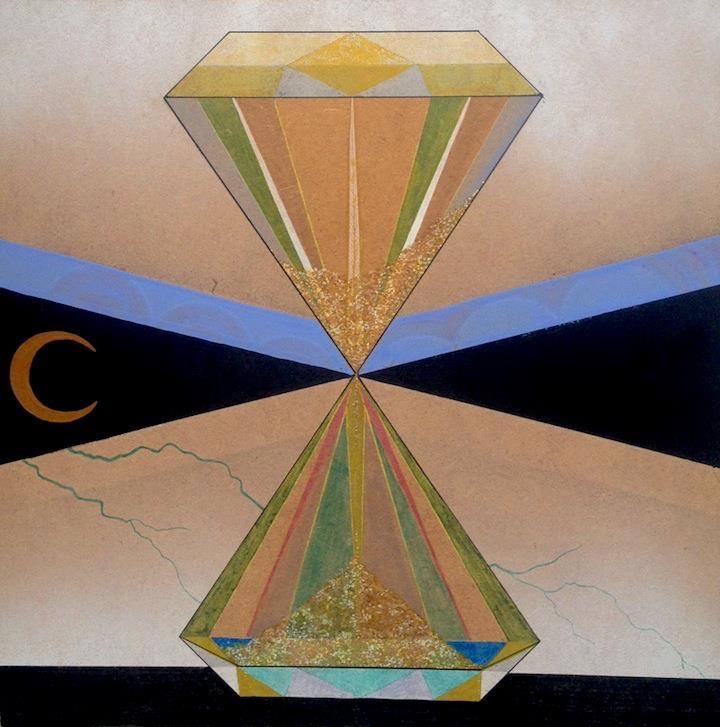
Claire Knapp, “Kintsugi Concept #1.” Saatchi Gallery.

Claire Knapp, “Kintsugi Concept #1.” Saatchi Gallery.


Rosemary Honey Cashew Butter | An Ode to Homemade, Edible Gifts

RosemaryCashew1
CashewButter2

For a brief yet impressing moment in time, I thought about starting a nut butter company. That was certainly one of the biggest curve balls of my life to date: coming out of a year devoted to completing my Masters in Contemporary Art Theory with a desire to become a fancy flavored nut butter entrepreneur.
It made as much sense to me – in context of my life at the time – as it was absolutely crazy. The part that made sense was this: Making nut butter from scratch was one of the most magical endeavors I undertook that year, during which I not only achieved my MA but also taught myself how to cook. Witnessing the nuts transform from solid to liquid astounded me, their natural oils releasing and completely altering their physical composition due to nothing more than an aggressively spinning blade. (Clearly I had no idea how much oil nuts contain.) What's more, it felt empowering. This food product that I had understood comes from a jar at the supermarket much the way an apple comes from the branch of an apple tree, I could make at home?! This meant I could not only control the quality of the nut butter but also the additional ingredients that defined it. The opportunities for creative deliciousness were endless! Maple cinnamon almond butter! Chai spice pecan butter! Or even something sweet and herbal, like...rosemary honey cashew butter.  

The part that was absolutely crazy about my nut butter entrepreneur pipe dream was, well, everything else.

Cashews
Rosemary
Honey

All of the holiday gifts I gave that year were food related. Educational. Homemade. I wrote out instructions for my parents (on graph paper with a wealth of colored pens) on how to make my favorite Oilve Oil and Maple Granola – customizable and refined sugar-free! – along with a "voucher" for a lesson where we would make it together. I made variety after variety of nut butter, some based on my preferences and some based on theirs. The gifts may have taken a bit more time than purchasing things online, but I could tell that they were deeply appreciated and meaningful. Unique. Imbued with creativity and care. 

The other great thing about gifting nut butter is that, if you are looking to give small gifts to many people, you can make a big batch with no more effort than making a small batch! Just saying.

While my dream of bringing inspired nut butters to foodies everywhere eventually fell by the wayside, I would be remiss to not mention that when I gave my former housemate a taste of this Rosemary Honey Cashew Butter the first time I made it, she literally freaked out and insisted that I start selling it at farmers markets immediately.  Even if you're skeptical and rosemary is not typically your thing, I encourage you to approach this one with an open mind. You may just find yourself surprised.

I hope everyone has a joyful and delicious holiday season – one that is nourishing in every sense of the word. Take time for yourself when you need it. Relish the sweets and listen to your body so you know when you should maybe ease up a little (that's, erm, some advice to myself that I thought maybe some of you may also relate to). Stretch in the mornings. Return to your breath in stressful times. Sink into the beauty of the season, in actions, words and things. Take good care. 

Blitz1
Blitz2
Blitz3
Blitz4
CashewButter4

Rosemary-Honey Cashew Butter
Makes about 1 cup.  Scale up for a larger batch.
Originally published on my 2012 blog, which I am not linking to because looking at it is like looking at your old yearbook photos, but which I am mentioning because, citations. 

Ingredients
2 cups raw cashews
2 tsp. fresh rosemary
2 tsp. raw honey
1/2 tsp. fine sea salt or pink Himalayan salt
1 tsp. cold-pressed sunflower oil, optional (for more runny cashew butter; it is quite thick otherwise)

Directions
1.  Preheat oven to 300°F.
2.  Spread cashews on a baking sheet and roast for 15-20 minutes, until fragrant. Stir a few times during roasting.
3.  Let cool for 5 minutes.
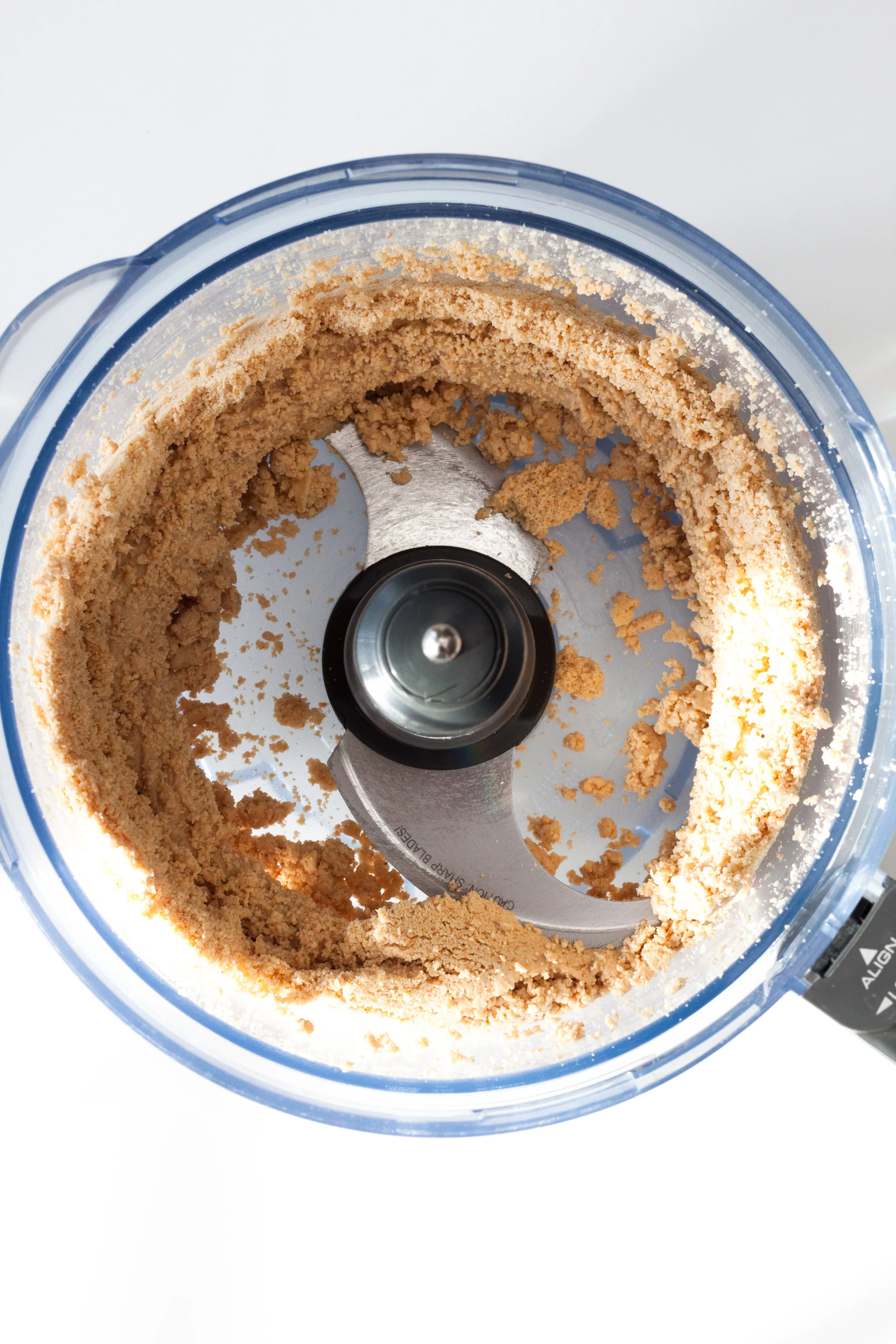
4.  Place cashews in food processor fitted with an S-blade and blend until the nuts turn into a smooth 'butter'. This could take anywhere from 5-15 minutes. Scrape down the sides of the bowl as needed.
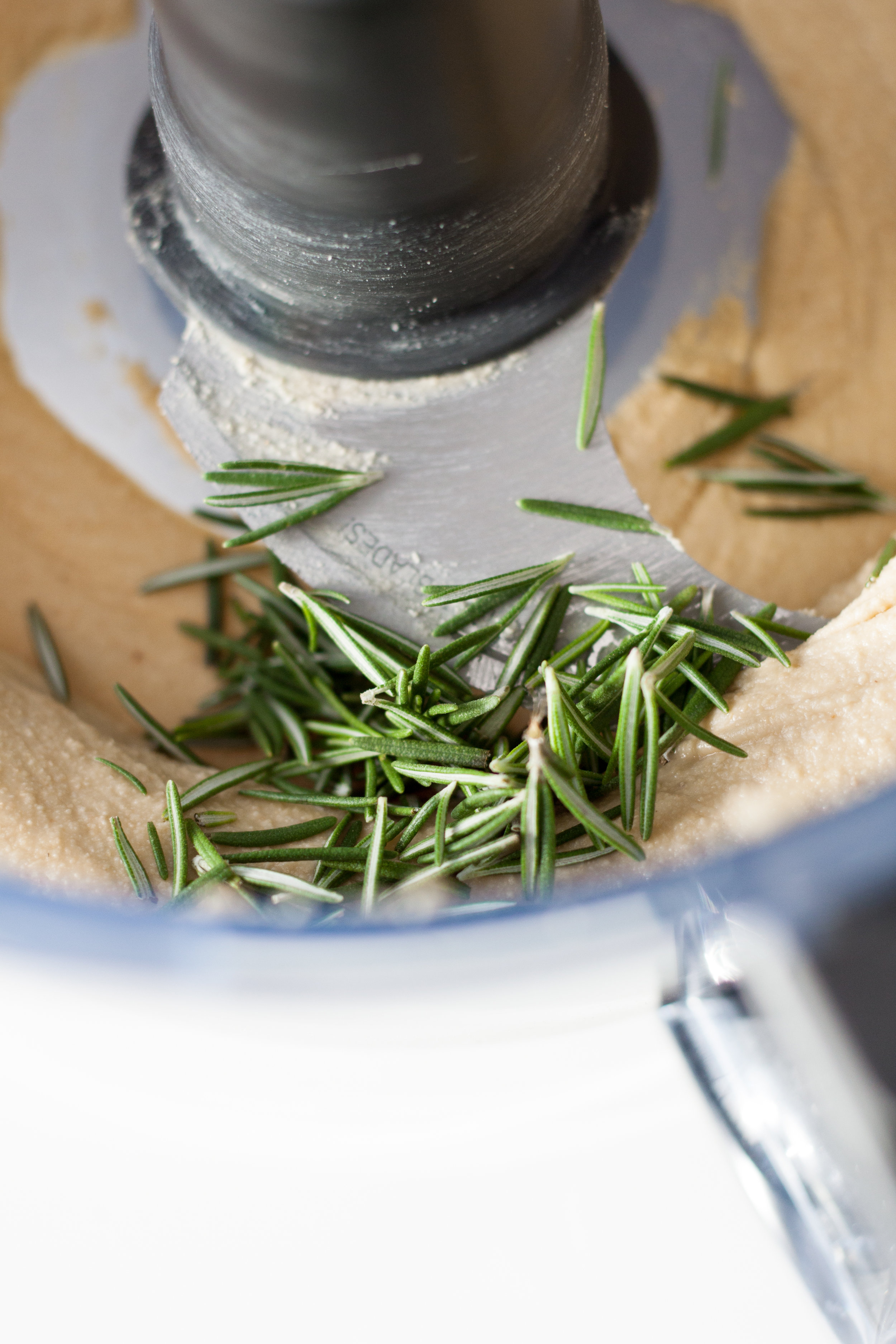
5.  Add rosemary and salt and process for another minute or two.
6.  In a small saucepan, melt honey over low heat until it is completely liquefied – much thinner than its syrupy state. Add to nut butter and process for another minute until fully combined. The nut butter will clump up again; keep the blade running until it returns to its smooth state.
7.  If you prefer your cashew butter even creamier, add the 1 tsp. of a sunflower oil.
8.  Carefully remove blade from food processor. Transfer nut butter to a glass jar with a lid and store in the fridge.

Black Sesame Tahini Banana Bread

IMG_5850.jpg
IMG_5734.jpg
IMG_5768.jpg
IMG_5784.jpg
mis3.jpg

Banana bread is an American staple. A big time comfort food. Un-fussy, un-pretentious and utterly delicious. But also, it’s basically cake.

This banana bread is not basically cake. It’s whole grain, higher in protein than usual (thanks almond flour! thanks tahini!), and has an incredible crumb and depth of flavor from the tahini…which I’m beginning to be convinced should be added to every baked good ever.

I feel very passionately about tahini. Don’t love it? It’s probably because you’re buying tahini that is mechanically ground, which most tahini is these days. This results in a bitter taste—which is not tahini’s inevitable fate! I encourage you to seek out stone ground tahini, which is the traditional processing method. This results in a suuuuper delicious, not at all bitter, eat it straight from the jar tahini. You’ll also want to make sure to get whole sesame (dark) tahini rather than hulled (light) tahini. This is also harder to find, but well worth the search, as it contains much higher nutrient values than tahini made from sesame seeds that have had the hull—the outer shell—removed. THIS IS MY FAVORITE BRAND. (Sorry, emphatic.) If you’re curious to learn more about tahini processing and nutritional values, check out my post here.

I made and photographed this tahini banana bread over Labor Day and took it to two potlucks that weekend…where multiple people from each gathering asked me for the recipe. Just saying. In case you needed any more convincing. :D

IMG_5829.jpg
IMG_5643.jpg

Black Sesame Tahini Banana Bread
Makes one 9"x5" loaf or two mini loaves
Adapted from A Cozy Kitchen

Ingredients
1 cup white whole wheat flour (or spelt or regular whole wheat if you can't find the white varietal)
1/4 cup almond meal
1/4 cup buckwheat flour
2 Tbsp. black sesame seeds (or brown), plus more for sprinkling
3/4 tsp. sea salt
1 tsp. baking soda
1/3 cup coconut oil, melted
1/4 cup muscovado sugar (unrefined brown sugar)
1/4 cup raw cane sugar
1 egg
1 tsp. vanilla extract
3 Tbsp. tahini
4 ripe bananas, 3 mashed & 1 sliced lengthwise

Directions
1. Preheat oven to 350°F. Grease and line a loaf pan with parchment. Set aside.
2. Mix flours, sesame seeds, salt and baking soda in a bowl. Set aside.
3. In a separate medium bowl, mix coconut oil and sugars together until the sugar begins to dissolve. Whisk in egg and vanilla extract until mixture is smooth and thickened.
4. Add tahini and the mashed bananas to the wet ingredients. Stir until thoroughly incorporated.
5. Pour the dry ingredients into the wet. Gently stir together until just combined (it's okay if the batter is a bit lumpy).
6. Pour batter into prepared loaf pan. Sprinkle additional sesame seeds on top, then place the two long slices of banana on top, cut side face up. Push them down into the batter so they settle a bit.
7. Set pan on baking sheet (it's easier to pull out of the oven this way). Bake until a toothpick inserted in the center comes out clean, about an hour.

On Beginning in the Dark

Nadia Alenov, “Beautiful Sorrow”.

Nadia Alenov, “Beautiful Sorrow”.

We talk and hear a lot in this life about how starting is the hardest part. Initiating a project, turning the seeds of an idea into the fruits of a reality. It's true: starting something has its particular challenges, often marked by fear or anxiety on top of the practical hurdles of building something from scratch. But there is also (hopefully) the catalyzing energy of excitement in the beginnings of a thing. Even fear or nervousness are active energies, if you think about how they feel in the body.

What we don't talk or hear as much about is how hard it can be to sustain something. To keep showing up once you've started, once the shimmer of anticipation has dulled and all the other demands of life begin to take up equal space again. The challenge of continuing to be excited or trust that a project is worthy of steadfast effort even if it is unfolding differently than you had imagined. 

Three months ago, I got a full-time job for the first time in over two years. It's amazing and I love it. And. Holy wow has my life changed—particularly in terms of time. Bandwidth. Ability to devote myself to the activities and projects that nourish me. It is has literally been a challenge to figure out how to spend 8.5 hours at work, commute, cook/feed myself properly, go to yoga, spend time with friends and rest. Add to that my second job teaching 2x a month on Sundays (which started up again mid-September), traveling, being a bridesmaid in a dear friend's wedding, hosting an epic Rosh Hashanah dinner and dealing with a crashed laptop which left me computer-less for a solid three weeks (and without photo editing software for the following four)...you can maybe begin to get an idea of where I've been lately. Which has not been on here.

And still: I am sinking my feet into the practice of showing up. Of meeting myself where I am. Of allowing the ebbs and flows of life that are beyond my control to direct my activity but not dictate it. Of practicing presence, mindful prioritizing and re-commitment in each moment to the things that matter.  

//

So that's where I've been. And where are we all now? Wow, November.

We're in the midst of a potent seasonal and energetic shift at present. Samhain (a Gaelic word, pronounced SOW-in), the Pagan festival of the Dead and the last day of the year according to ancient earth-based calendars, is a festival celebrating the end of the harvest and the beginning of the dark half of the year. In some traditions it is observed on October 31st; in others, it extends from October 31st until the moon is new in Scorpio, which falls this year on November 18th. The most mysterious of the Zodiac signs, Scorpio is the sign of life, death and resurrection, of passion and hidden depth. Of turning inwards; doing deep work. 

Samhain begins on Autumn's cross-quarter day—the midpoint between autumn and winter. Every season has a cross-quarter day, which is the time at which the energy of the forthcoming season begins to percolate, even though its visible manifestations won't emerge for another six or so weeks. I'm compelled by the idea of cross-quarter days, rife with wisdom and metaphor: The insistent slowness of and necessary patience with major transitions or energetic shifts. The fact that everything begins in the dark.

In many ancient calendars (including some that are still observed, like the Jewish calendar), each day ends and begins at sundown, beckoned with the veil of the dark. In Pagan and earth-based calendars, the new year begins on Autumn's cross-quarter day, aligned with the emergent energy of the darkest season of the year. Babies are seeds planted and nurtured in the womb. Ideas are sparked in the depths of the mind before they are ever brought to life in the physical realm. 

I find such peace and beauty in this: the idea, evidenced to us by the processes of the natural world, that just because we cannot yet see the physicality of a thing does not mean it is not there, brewing. Does not mean work is not being done. It substantiates the quiet. The ruminations. The seeds. 

The days are darker now than they are light. Let yourself align with it. Turn inwards. Slow down. Reflect. Release. Reconnect to recuperate. The earth is inviting you to; with such inherent wisdom, it seems rather wise to listen.

Blistered Snap Peas with Miso Butter

IMG_5482.jpg
IMG_5444.jpg
IMG_5535.jpg

In all honesty, this is kind of a non-recipe—which is often what summer calls for, when produce is bountiful and flavorful even with little to no preparation. It’s a recipe for those times when you’d rather be outside than in your kitchen, or taking your kitchen outside (to the grill).

This recipe is simply charred snap peas slathered in miso butter—which is miso paste mixed with butter. Simple, simple, simple but whooooa is it delicious. I made it in a cast iron pan because I don’t have a grill, but if you do have a grill, go ahead and throw the snap peas in a grill basket and go to town. It’s the perfect appetizer for a low key evening of entertaining or side dish to a weekday meal.

IMG_5563.jpg
IMG_5587.jpg

Blistered Snap Peas with Miso Butter
Serves 4 as a starter or 2-3 as a side

Ingredients
1 lb. snap peas, woody ends cut off
3 Tbsp. room temp butter, organic and pastured if possible
1 Tbsp. sweet white or mellow yellow miso paste
flaky salt and freshly ground pepper

Directions
1. If you have a grill, place the snap peas in a grill basket and grill until blistered. If not, heat a cast iron skillet on medium high. Place a third of the snap peas into the skillet and, using tongs, spread them out so that each snap pea is touching the surface of the pan. Cook until blistered, about 2 minutes, then flip and cook the other side for 1 minute. Repeat with remaining snap peas.
2. In a small container, cream the miso together with the room temperature butter. You will have leftovers (you're welcome).
3. Take a generous spoonful of the miso butter and slather over the warm snap peas. Finish off with a generous pinch of flaky salt and freshly ground black pepper.

On the Paralysis of Political Action: Catalyzing Your Power

Phases of the July 2019 solar eclipse as seen from the La Silla Observatory (Picture: EPA)

Phases of the July 2019 solar eclipse as seen from the La Silla Observatory (Picture: EPA)

“This work of connecting our light to the world does not need to be done through a mass movement, or by millions of people...What matters is the level of participation: whether we dare to make a real commitment to the work of the soul.”

~Llewellyn Vaughan-Lee

“It is time to redefine power, to expand our concept of what being powerful really means. True power is love. It is not power over someone. It is everyone, all of us, standing together in a circle, building power side by side.

“As I build my power, I create a mirror, a reflection of power that you can use to build your power…I inspire you and you inspire me; and together we create a world of healthy, interdependent, creative people.”

~Lynn V. Andrews


I've been finding it hard to justify sharing pictures of food on Instagram these days. Been wondering what place and need there is for this work of mine when America is erupting with groundswells of egregious hate. I've been mulling over how to be an activist, how to contribute to positive change and purposeful resistance when I live in an incredibly liberal place and don't necessarily feel called to rally on the front lines of organized protests—as vital as I believe they are. Maybe you can relate?

Tomorrow, August 21st, much of America will bear witness to a total solar eclipse—the moon aligning directly between the earth and the sun, blocking out the sun's light and allowing us to see its outer atmosphere, haloed in glimmering light. This will be the first total solar eclipse to pass exclusively over the US since the country was founded in 1776 [1]. That's not only bonkers but also eerily resonant, as eclipses are considered to generate energetic upheaval, creating substantial opportunities for rewiring and growth.

As astrologist Cathy Pagano explains,

"Eclipses signify shifts, completions, endings, and releasing along with new beginnings, new directions and openings...This is a chance for all of us to wake up to our unity, and our responsibilities to each other, to Mother Earth and to the future. 

"So we can’t mistake the heavenly advice: America, wake up and pay attention. It is the American People, not the government or the power structures, that this Leo Solar Eclipse calls to. 

"It is our wake-up call to create that more perfect Union. Not only in America, but with the whole world.

"But first we have to be at one with ourselves…”

Why must we first be at one with ourselves in order to create a more perfect American (and worldly) union? Because we don't live in a vacuum. And as much as our egos would have us think the world revolves around us or that we are powerless in the grand scheme of things (among many other self-centered ideas), we are scientifically all made of the same matter and are energetically connected. If we are all ultimately one and contribute to a universal energy or vibration, then it follows that by raising our own individual vibrations (a.k.a. being at one with ourselves), it will impact our communities and will ripple out in ways we cannot comprehend. 

// 

So this might sound kind of nutty, but here's what I'm throwing out: On an energetic level, perhaps 'activism' looks like living in alignment with your full, true self. Are you with me? In order to be one with ourselves, we must first and foremost be present with ourselves. We must listen to all that arises in any given moment, feel it, name it and acknowledge it without judgment so that it can be dealt with or pass. We must act in accordance with that which nourishes us physically, emotionally and spiritually. We must listen to our passions, our callings, the things that bring us joy and pursue them without abandon. And we must be humble. We must know when to step into the power of our voices and when to check our privilege and listen attentively instead. We must do what is required of us to increase our awareness and to grow.

This, I think, is how we go on—how we do our own individual light work and not feel guilty about it when it doesn't directly address the dire sociopolitical situation at hand. We do it with intention and awareness. With acknowledgement that in stepping into our power we are creating mirrors for others to build their power. That might look like posting photos of food or the kittens we're fostering or the music we're making or the marathons we're running, even if they aren't inherently political acts or obviously contributing to the fight for a more inclusive and just society.

//

Do not, however, mistake this for a free pass to political disengagement. 

This does not let us off the hook—especially as white people. Our responsibility to be aware and critical of our inherent positions of privilege and power is perhaps more urgent than ever before. This is equally true for men. And heterosexuals. And cis-gendered folk (i.e., those of us whose gender identity aligns with our birth sex). And those who do not belong to targeted religious faiths.

We don't all need to be on the front lines, but we all must be doing the work of political awareness and engagement—however that feels doable for you. Read the news. Talk about it with your friends. Talk about it with your conservative family members. Approach conversation with openness and curiosity rather than shouting down from your high horse. Explore the plethora of resources on learning about white privilege, check some books out from your library...and then read them. Use the vast social web of the Internet to share what you've been learning, thinking, grappling with and to connect with others about it, too. And then begin to integrate what you've learned into the ways you and your privilege show up in the world.

We are in the depths of a great shift and things are going to continue to get worse before they get better. Yes, I am afraid. But I refuse to cower, to be complacent about the ways in which this system serves me, or to disengage because as a white person living in California, I have that option. I am committed to using this space to promote love, knowledge and healing. I am not a vehement political activist, so most often that looks like pictures of food and recipes and tools for mindfulness and self-care. We all need to keep doing our light work, trusting that it is imperative to our creation of a more just and inclusive world. And we cannot turn our backs to the social and political issues at hand. 

I am with you, all of you. If you have resources you're stoked about or ideas of how to be an activist in these urgent times, please share them in the comments. If you are a creator of any kind or are contributing to our world in positive ways, please share links to your work in the comments as well. Let us all stand in our power and bolster one another up as we do <3.

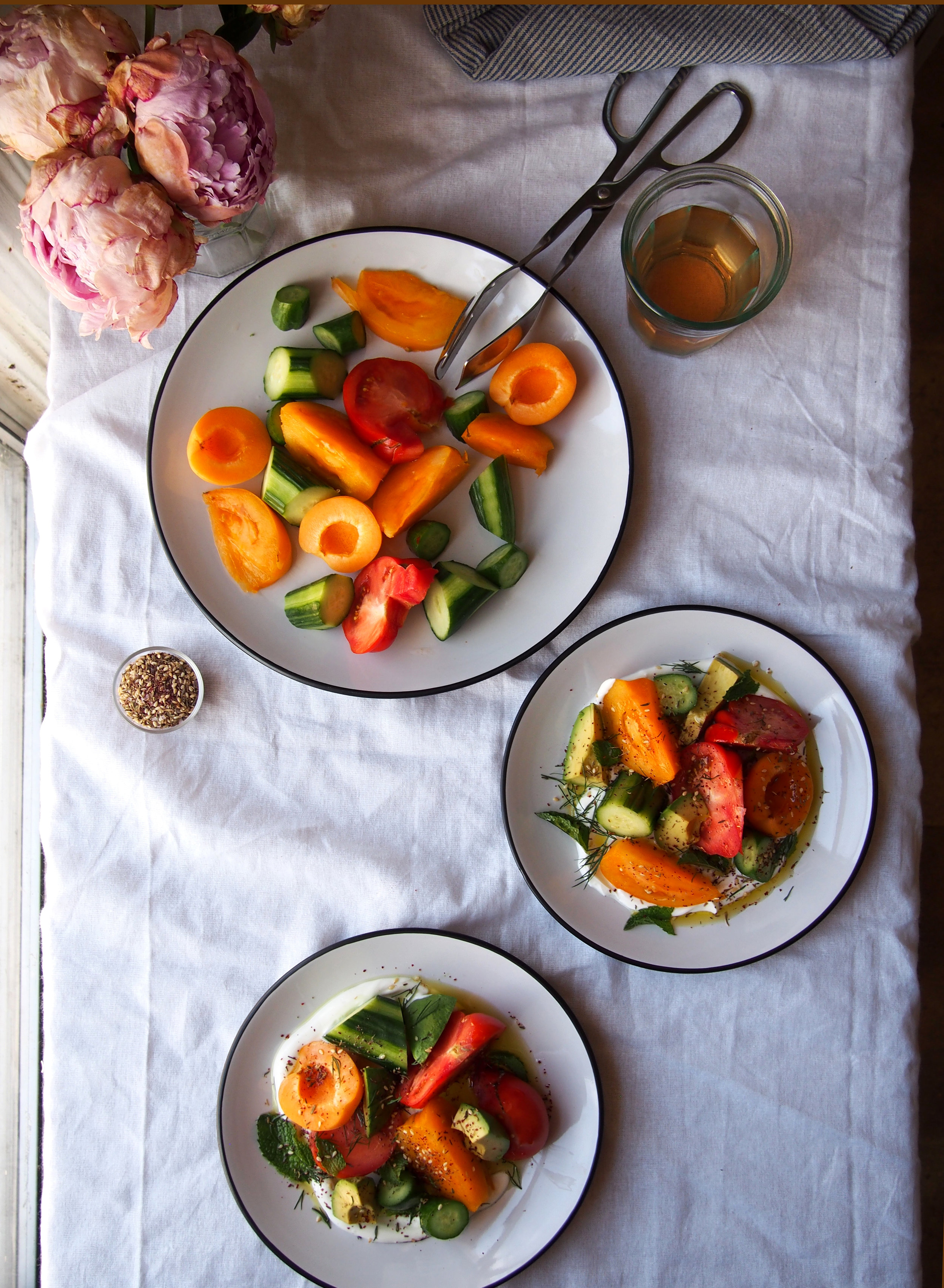
Heirloom Tomato, Apricot & Cucumber Salad with Yogurt & Za'atar

OH HEY, IT'S SUMMER! This basically means you don't have to cook at all if you don't want to, because everything is luscious and ripe and can be sunk into off the vine with your teeth (no silverware necessary).

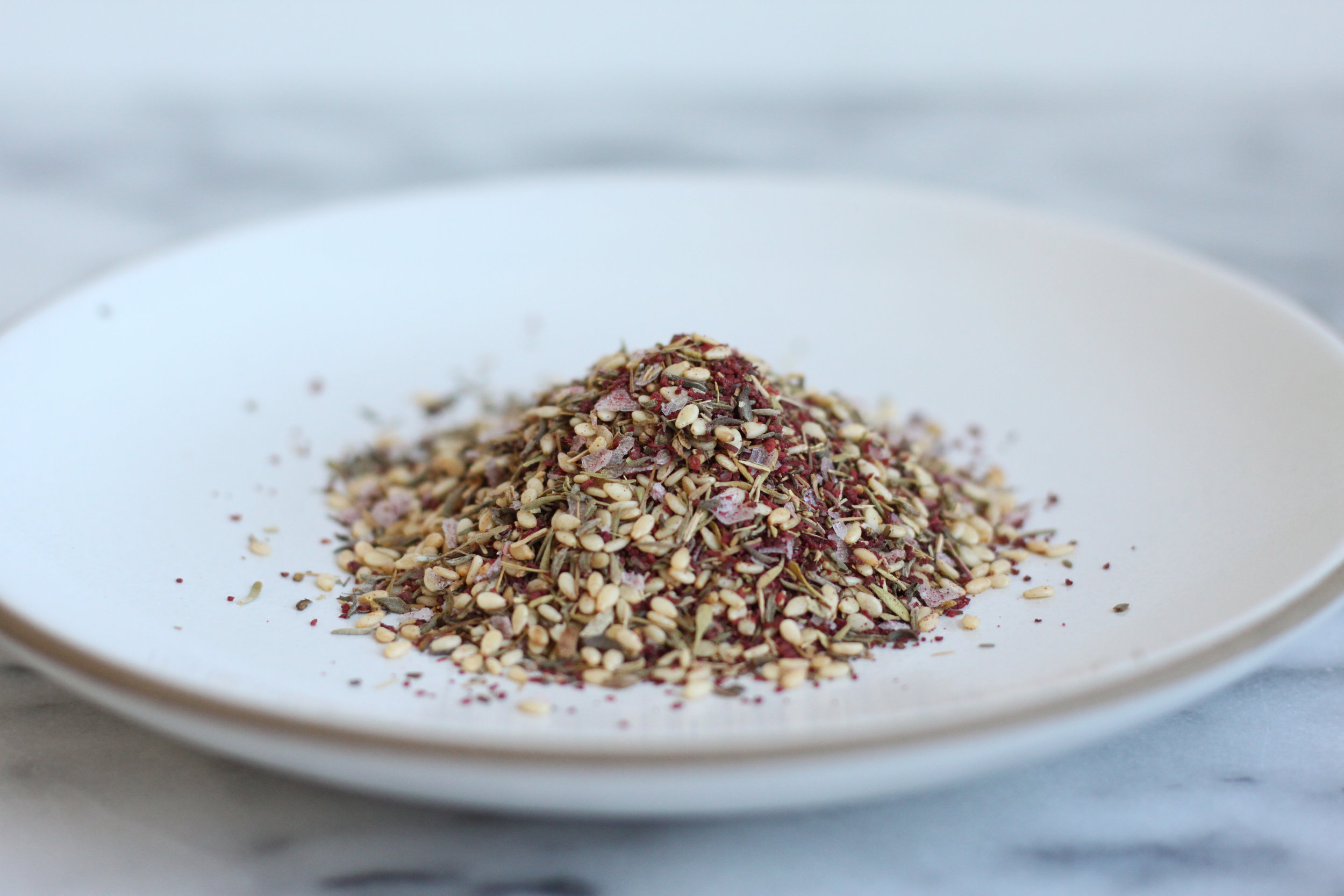
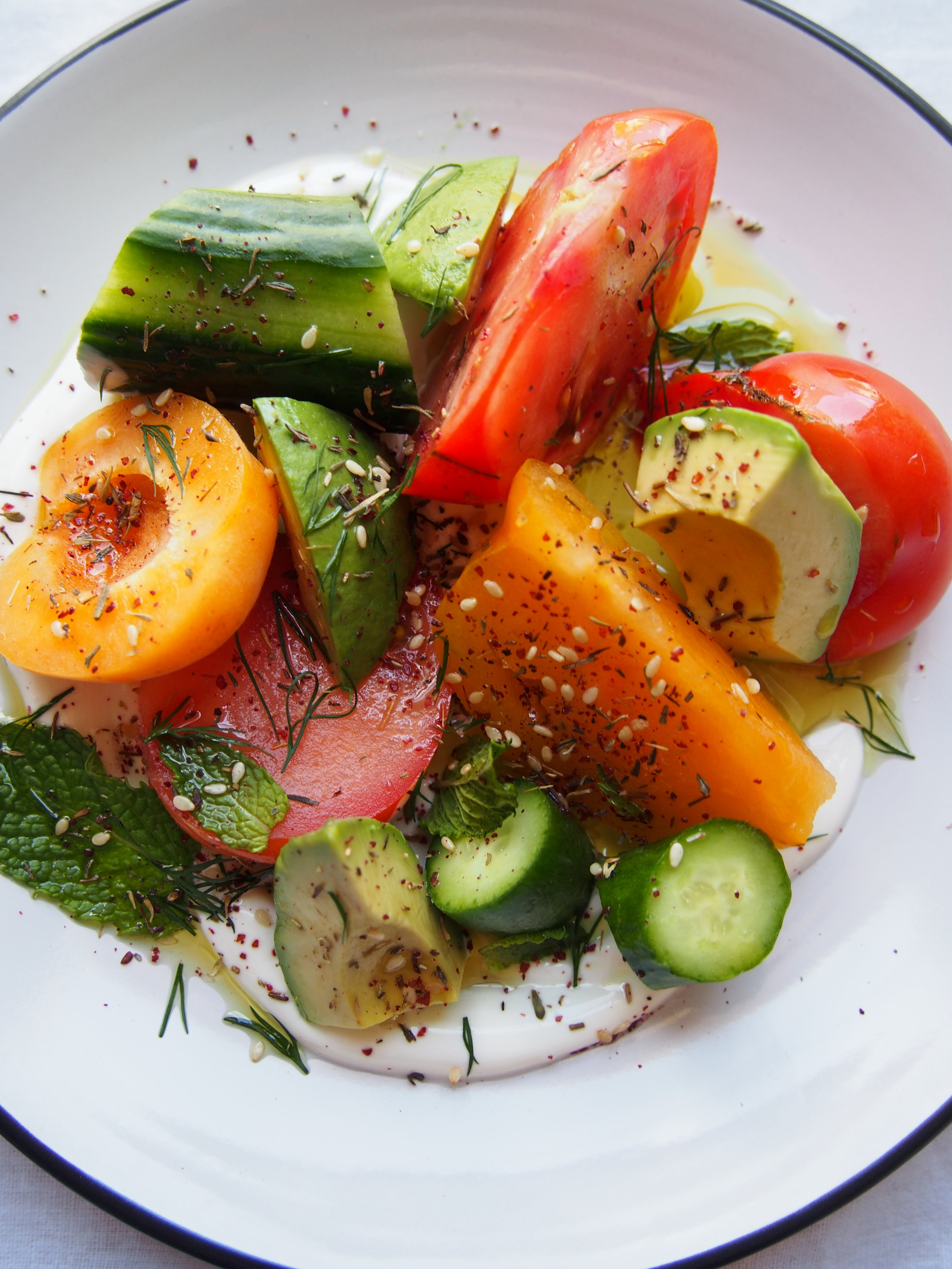
This salad is a celebration of the ease of summer eating and the inherent vibrant flavors that make the produce this time of year shine. It is a cooling salad with some Middle Eastern vibes because they're my favorite (full disclosure of cuisine bias here). The one ingredient with which you may be unfamiliar is za'atar, which is a Middle Eastern spice blend made of thyme, oregano, sesame seeds, sumac and salt. It's delicious! You can make your own or buy a jar at specialty spice shops or Middle Eastern markets.

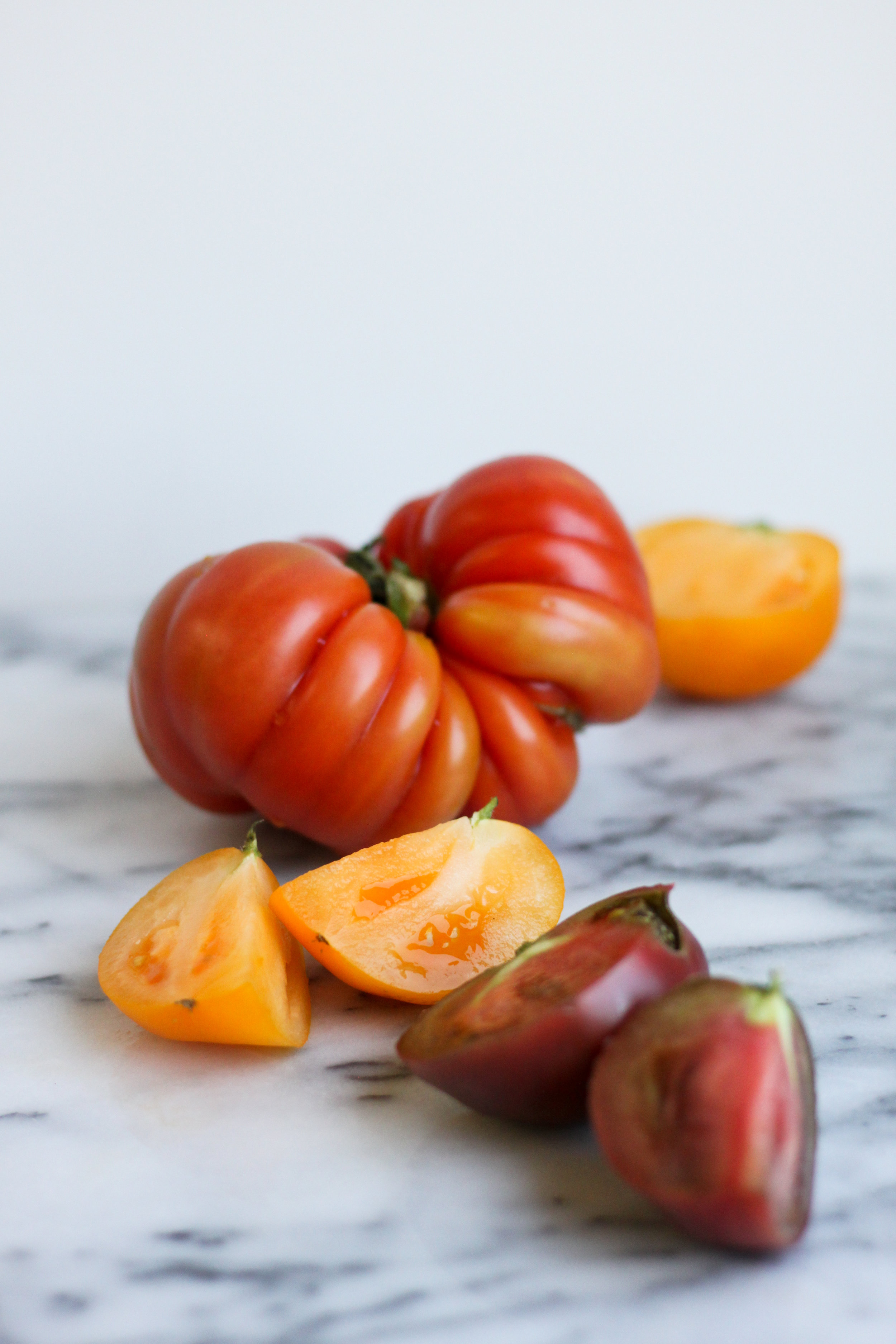
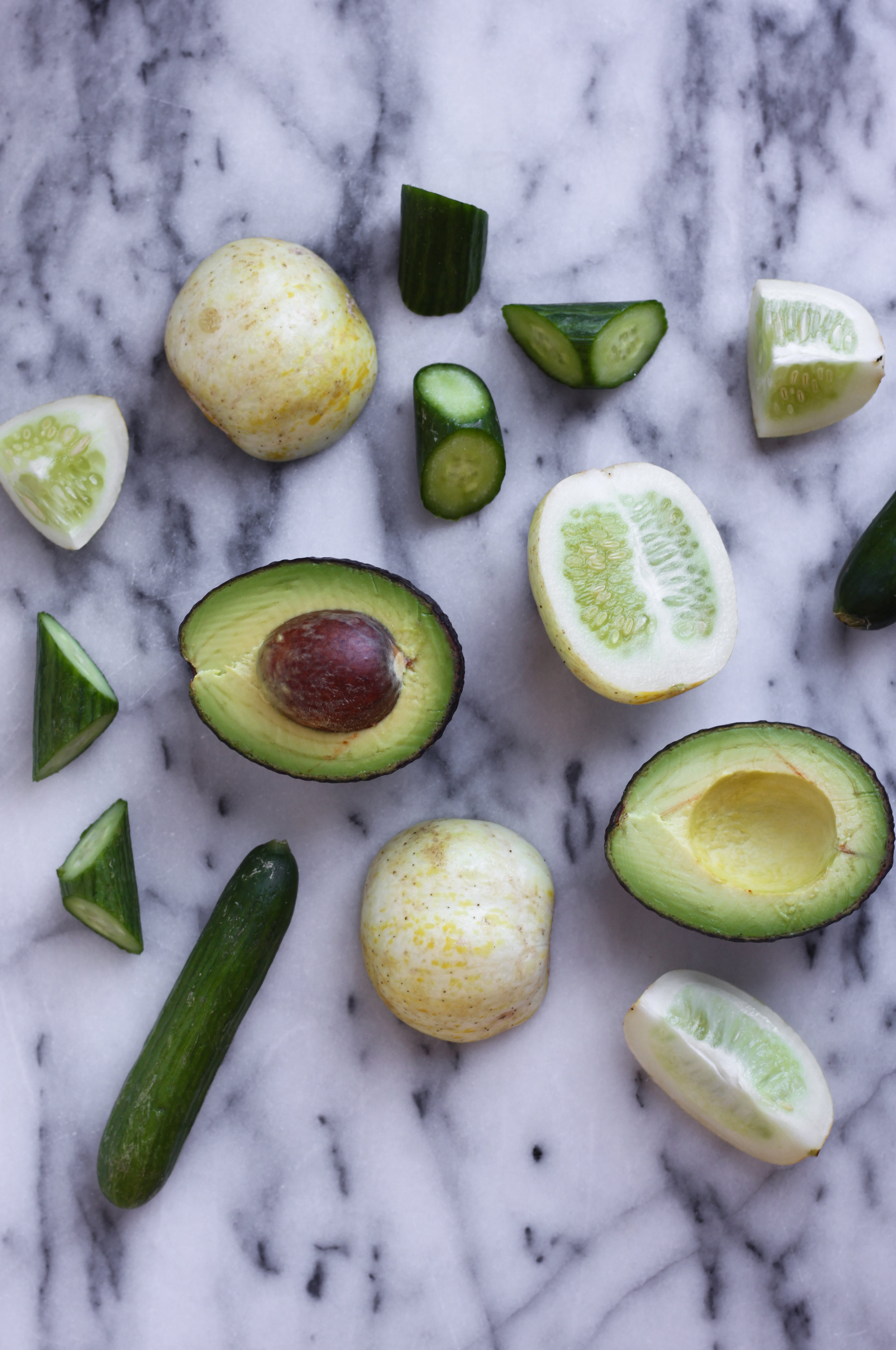
I've also used unusual varieties of cucumbers and tomatoes here because they're fun and you can only get them during the summer! If you can't find them, don't sweat it; a normal, ripe, preferably relatively local cucumber or tomato will do the trick just as well. Enjoy!

Heirloom Tomato, Apricot & Cucumber Salad with Yogurt & Za'atar
Serves four as a starter or two as a main

Ingredients
3 medium heirloom tomatoes, cut into large wedges
4 apricots, pit removed and cut into quarters
1 avocado, cut into 1/2" cubes
2 lemon cucumbers or 1 painted serpent cucumber (or 2 Persian cucumbers, failing those), cut into 1" chunks
6 Tbsp. plain whole milk Greek yogurt
1 Tbsp. good quality cold-pressed olive oil, plus more for drizzling
2 Tbsp. mint, roughly chopped
2 Tbsp. dill fronds
1 lemon
1 Tbsp. za'atar
salt + pepper

Directions
1. In a small bowl, mix together the Greek yogurt, 1 Tbsp. olive oil and a pinch of salt.
2. Spread the yogurt mixture on the bottom of your serving platter.
3. Arrange the slices of tomato, avocado, apricot and cucumber together on top of the yogurt. Scatter herbs and za'atar on top.
4. Finish off with a generous drizzle of olive oil, the juice of half a lemon, salt and pepper. Adjust to taste.

On Balancing Your Energy

© Illustration by Brooke Balliett

© Illustration by Brooke Balliett

Last fall, I had the opportunity to TA a class in the Integrative Health Masters program at the California Institute of Integral Studies. Called Mindful Health, the course offered an in-depth examination of how and why meditation and mindfulness are essential practices in cultivating overall health and wellbeing. We talked a lot about energy, suffering, self-compassion, ambition, burnout, the nervous system, the brain and, taking these all into account, the ways we can manifest our own vibrant health—and support others in doing so for themselves. One of the teachings that Megan, our instructor, shared with us has felt particularly resonant as I've struggled to show up in this space over the past six weeks. As such, it feels worthwhile to share with you here, now.

Let's take, for a minute, a more expanded notion of suffering than the extreme situations that the word typically brings to mind. Suffering as any state of dis-ease, be it a habitual undercurrent of anxiety; stress related to uncertainties or obligations in one's life; heartbreak or shattering disappointment of any kind; and so on. Early on in the class, Megan re-framed suffering to be defined not by our circumstances but by our relationship to them. I appreciate this framing so much because it gives us agency, which is absolutely essential in the path to self-love, self-worth and mind/body/spirit health.

In this iteration, suffering is not caused by undesirable events or circumstances that are inflicted upon us. Rather, suffering is caused when we try to control the things that are not in our control and when we don’t give determination to those that are. Unfortunately, all too often, there is a confusion about which is which. We need surrender and volition, both. Compassion and determination, both. And we need the ability to identify which circumstances require which approach—which is a clarity that mindfulness and meditation help us cultivate.

 //

According to the Vedantic tradition (one of the world's oldest spiritual philosophies), everything in existence embodies three basic energetic states at all times: sattva, which is balanced and harmonious; rajas, which is active and impassioned; and tamas, which is resigned or destructive. Called gunas, these energies exist constantly and simultaneously in different degrees. At any given time, they can be in balance—aligned more with sattva—or out of balance. 

Oftentimes, the suffering we can experience on a daily level is reflected in one or more of these energies being out of balance. For example, too much rajas might feel like overstimulation, crazy caffeine jitters, or incessant multitasking. Overly-exerted rajas uses a lot of energy but not necessarily in an effective way. It also leaves little to no space for reflection about the tasks one is doing. This energy is tricky because our culture actually values and promotes an overstimulation of rajas, even though it can easily result in burnout, disconnection from self and dissatisfaction. When rajas is in balance, it looks like circulation, movement and change—which are often, if not always, good things!

On the other end of the spectrum lies tamas, which when overstimulated manifests as resignation or complete depletion. Out of balance tamas is the, "Fuck this" energy, the "What's the point?" energy, the drinking-to-forget or total crashing energy. When in balance, tamas is the energy that allows us to sit, reflect, recharge, process and integrate all the activity of our lives.

Whether or not you believe in these energetic principles, what I have found valuable in learning about them (and hopefully you will too!) is that they have enabled me to label my energetic states when I feel "off," not myself, stressed out or unhappy, and to then identify actions that I can take to help bring myself into balance—or, in other words, change my relationship to and reduce my suffering. Rajas and tamas are in opposition to one another; this means increasing one will help bring the other into balance. If I am feeling crazy stressed and overwhelmed, I can pause and actively choose to tap into tamas energy by taking a handful of deep breaths, doing some restorative yoga poses in my room, sitting in nature or journaling. If I am feeling aimless, unmotivated or physically depleted, I can integrate some active rajas energy to shake me out of my rut by going for a walk, dancing around my bedroom, or—hey!—even cooking something tasty to eat.

We are constantly in relationship with everything that falls into our lives—people, opportunities, failures, our phones, the news, our bodies, our food, our work, our free time, and even our histories. These things all have the potential to be a catalyst for suffering, to varying degrees, at any given point in time. It is essential to remember that it is our relationship to the thing that will dictate if and how much we suffer. By building the muscle that brings our awareness to the qualities of that relationship and beginning to act in ways that generate energetic balance, we can, little by little, begin to cultivate greater internal peace.

Lemony Fava Bean Tartine

IMG_4108.jpg

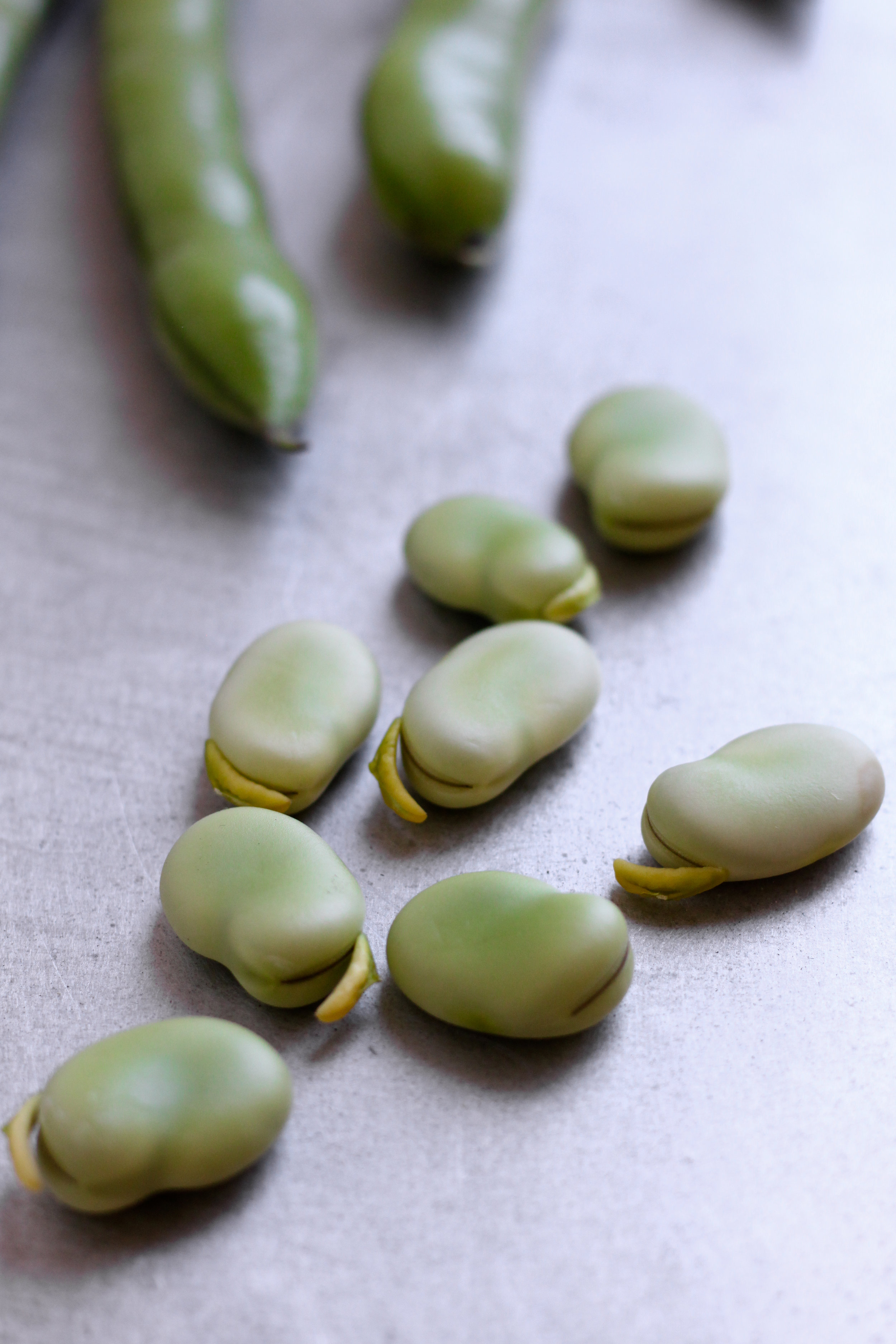
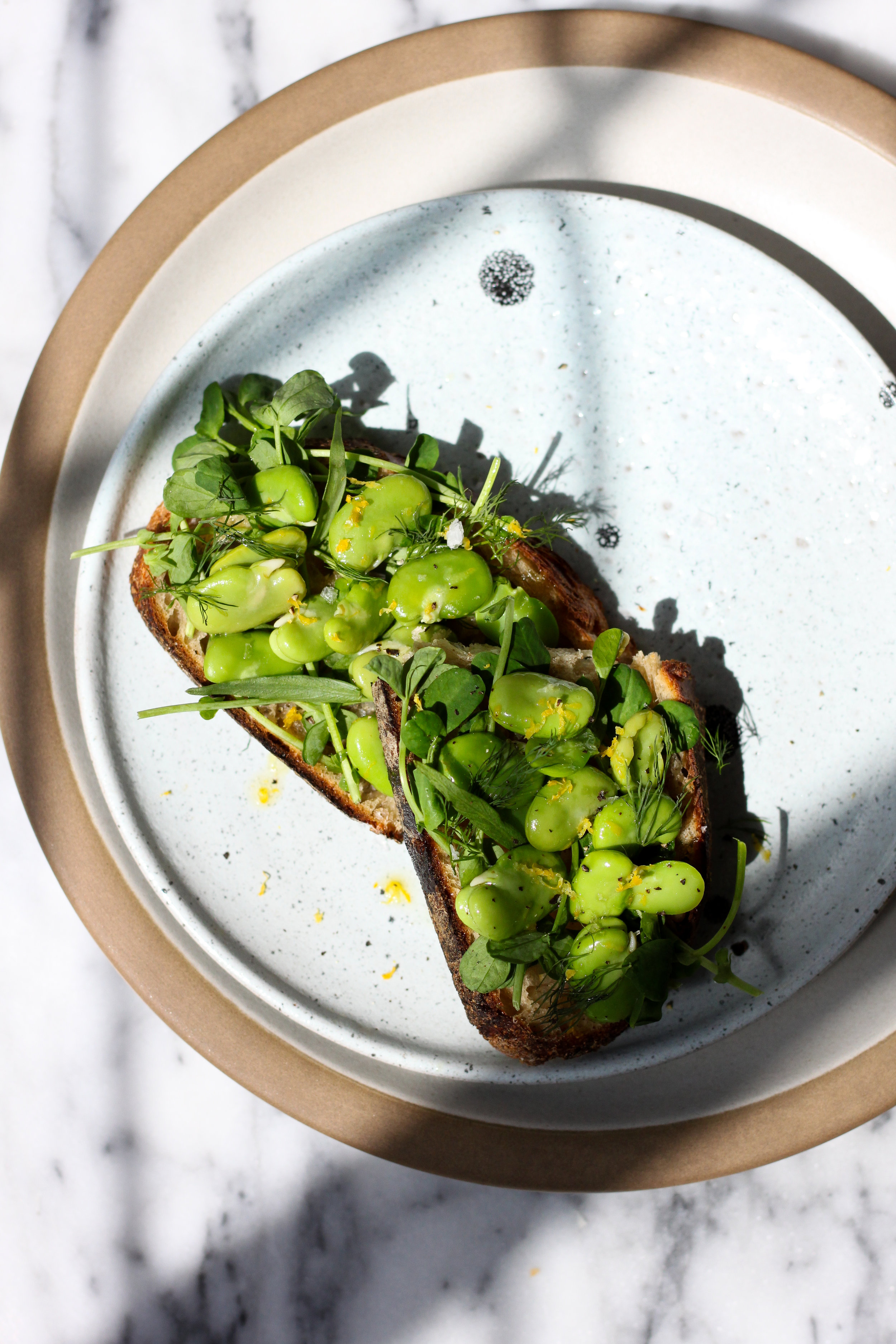
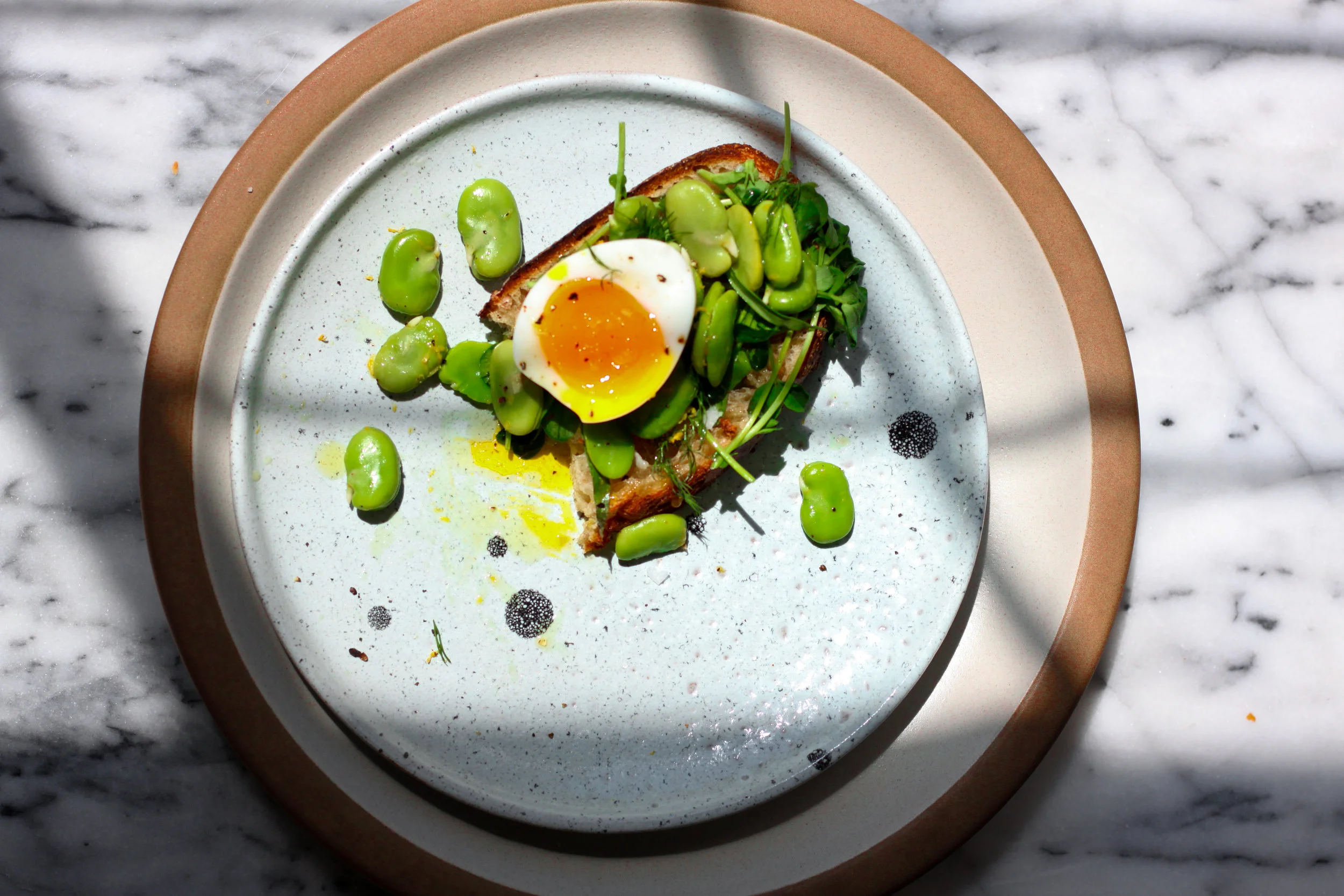
This is a super simple celebration of spring. As the bounties of the season begin to pour in, we are blessed with vibrant and delicious produce that often requires little to no cooking. I also love the revelations that come with tasting fresh foods straight from the pod or the cob that you might eat from frozen at other times during the year; there is no comparison! Fava beans are less common in the standard American diet than, say, peas, which is a shame because they are suuuuper delicious. They also happen to be crazy nutrient dense, containing an array of vitamins (folate, thiamine, vitamin K, vitamin B6) and minerals (iron, manganese, potassium, copper, zinc, magnesium) in addition to fiber and protein! 

I used dill and tarragon in this recipe because I seem to perpetually have leftovers of those herbs in my fridge as of late. This would also be delicious with mint, basil, chives, chervil, parsley, or some combination thereof. You can have it on toast or off; with an egg or without. The basic equation here is fava beans + herbs + lemon = yum. It's pretty much that simple.

Lemony Fava Bean Tartine
Makes two toasts

Ingredients
1 1/2 cup fava beans (from about 1 lb. favas-in-the-pod)
1 unwaxed, organic lemon, zested
1 1/2 Tbsp. fresh squeezed lemon juice
3 Tbsp. cold-pressed, good quality olive oil
1/8 tsp. pink or sea salt
2 handfuls pea shoots
1 Tbsp. dill fronds, fresh
1 Tbsp. tarragon leaves, fresh
Two slices whole grain or country sourdough
Soft boiled egg (or cooked to preference)
Fresh ground pepper, to finish

Directions
1. Bring a medium pot of water to a boil. Fill a medium bowl with ice water and set aside. Cook fava beans in the boiling water for 1 minute, then strain and transfer to the ice water. Peel the waxy outer coating from the fava beans.
2. In a medium sized jar with a lid, shake together the lemon zest, lemon juice, olive oil and salt. Add the fava beans to the jar and gently shake to coat.
3. Toast your bread — a toaster is great but a grill pan with some olive oil would be extra delicious.
4. Place one big handful of pea shoots on each toast slice. Pour the favas and their oil on top of the greens (you may have a bit of oil leftover; it makes great salad dressing!). Sprinkle 1/2 Tbsp. of each herb onto each slice. Top with an egg if desired and a few twists of freshly cracked black pepper. Enjoy!

On Self-Doubt, Success & Creating a Meaningful Life

Xinalani_ocean1.JPG

you do not have to be a fire
for
every mountain blocking you.
you could be a water
and
soft river your way to freedom
too.

— options

                                - nayyirah waheed


I went on a run today, for the first time in over a year and a half. Okay, it was more like a 67% walk, 33% jog, but still. I was proud of myself. Proud of myself for listening to the tightness of my body and its yearning to move, for honoring my heart’s desire to get out of the house and absorb the extending light of these imminent summer days.

On the loop back towards my house, I took a slight detour to the Berkeley Marina. Headed down a narrow offshoot of a dirt path, got as close as I could to the water without clamoring down its jagged shore. Found a bench and sat, taking in the expanse of ebullient water, the Golden Gate, the city of San Francisco hovering off amidst the fog. I closed my eyes, took a deep breath and began to meditate. Felt my body tall and rooted against the pressure of the aggravated wind.

There has always been something compelling to me about vast bodies of water. Their host of contradictions, serene and agitated, methodical and unpredictable, familiar and unknowable all at once. Never either/or; always both/and. The Bay was feisty tonight, its entire surface cast in vigorous ripples as far as the eye could see. As I watched the waves coalesce and rise and crash against the rocky shore, I saw the water transform from an elegant, smooth, dark mass to a mess of foamy white, splaying itself over and between the crevices of that which stood in its way, only to settle and reincorporate itself once again. Changed, yet still the same.

I sat and meditated on the effortlessness of waves. The way they are never anything but themselves, moving always with grace and sometimes immense drama, separating and reintegrating endlessly. I thought of their poetry, and then of the poetry in nayyirah waheed’s words. Wondered how I can better soft river my way to freedom, too.

//

I often wonder—in a very doubtful kind of way—if this blog will ever lead to anything significant for me professionally. If it will ever touch the tender hearts of large numbers of people and inspire them to be kinder and gentler with themselves, to find a bit more softness and joy in the often challenging minutiae of living. If the recipes I create and share will make it into scores of kitchens that are not my own. I wonder if my writing is too wordy, too heavy or dark. I wonder if and how I will ever stand out in this insanely saturated industry of food and wellness. And not having resolute answers to these questions makes me wonder if it’s even worth doing, when the goal is to achieve those things and they all, for better or worse, feel kind of impossible.

I struggle with myself a lot sometimes. Less than I used to, but there’s still a lot of self-doubt and negative talk within me. A lot of feeling like I’m not where I “should” be by now, especially professionally. Worrying that I’m never going to get to where I want to go. And yes, there is trust, too. The kind of trust that comes from the experience of making big choices that have been potentially risky yet always aligned with my intuition—choices made from a place of trust rather than fear—and witnessing them always work out. Or work out so far, anyway, in their ways. I am trying to lean into that trust more, to grow my patience more, but I’m going to be real with you: sometimes it’s hard.

This self-criticism and self-doubt recently brought up a question, while in conversation with a close friend: How do we change our personal barometers of worth in a society where the success = money = happiness model is so pervasive that we end up believing it’s true—and that it is what we truly desire? How do we keep showing up for ourselves in our passions and creative pursuits—especially if they are also the things we wish to become our livelihood—when opportunities for comparison and, by extension, self-judgment abound? 

//

As these ideas surfaced, Alicia offered a potent musing: What if, instead of collectively aspiring towards successful lives, we aspired towards meaningful ones? Or if we redefined “success” as measured by meaning rather than professional/material gain? Our entire world would be different. Success, she astutely observed, is most often a self-centered pursuit; we seek personal achievements, be they money or status or other forms of external recognition. And we grasp for these things, believing that the having or lacking of them is correlated to our worth. Meaning, on the other hand, is achieved most often through a selfless or connective energy; we make offerings, sit in wide eyed curiosity and compassion with one another, commune with nature and give ourselves over to awe. And it is truly in this giving of and connecting to ourselves, others and the world around us that we grow. Become full.

//

In vocalizing my frustration and slight resignation around the potential of the blog to Alicia the other day, she challenged me by asking why it has to lead to anything. Why it can't just be valuable for the process of its creation. For me. And I know she is right. That I do it because I enjoy it and love creating the recipes and taking and editing the photos and writing, even if it is hard. But it is also, and has always been, an externally facing endeavor. Created for the purpose of connecting with and inspiring other people and hopefully, eventually, serving as a springboard for a career. And so, yes, it is difficult to detach from that aspect of it—from the yearning for it to be successful on those terms.

Detach. In Buddhist thought, attachment is taught to be the root of all suffering. So what if I wrote Pollinate with the wholehearted intention of creating beauty and growing my own self, in both skills and thought, and with the hope that it might resonate with some people but not attached to the idea that it must? What if we pursued the things that make us full, savoring the process of them rather than being motivated by an idea of what they might bring us in our unwritten future? What if we were water, fully and always only what we are in any given moment, coalescing and differentiating when tides rise and waves crash, moving around boulders with deft grace rather than resistance and self-doubt? What if we trusted our hearts and paths enough to exist fully in the present and, ultimately, get out of our own ways?

We may find a bit more freedom in that, I think. And a bit more happiness, too.

Xinalani_ocean2.JPG